Blank Canvas, Endless Possibilities: Your Engraving Plate Primer
The Beginner's Guide to Choosing Blank Metal Plates for Engraving
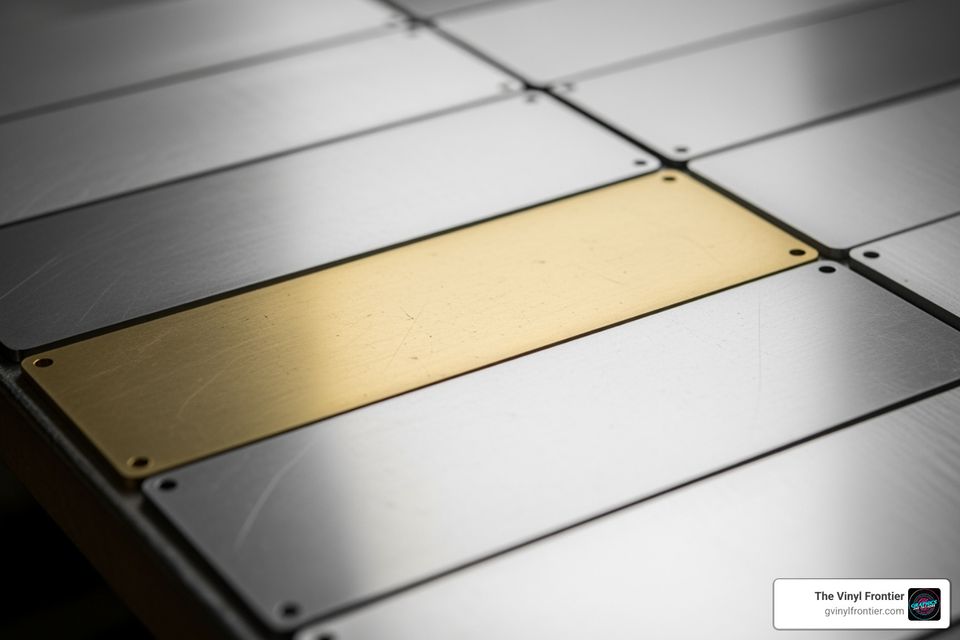
Blank metal plates for engraving are flat, unfinished metal surfaces — usually aluminum, brass, or stainless steel — that you engrave with text, logos, or designs using rotary, laser, or hand engraving tools.
Common sizes range from 1x3 inches up to 8.5x11 inches, with thicknesses typically between .020" and .027". Prices run from roughly $0.70 to $3.40 per plate, depending on material, size, and quantity.
Whether you're making office nameplates, memorial plaques, or trophy inserts, picking the right blank plate upfront saves you time, money, and frustration.
At The Vinyl Frontier, we bring deep hands-on experience with custom signage materials — including blank metal plates for engraving — to help local businesses and individuals create professional, lasting results. In this guide, we'll walk you through everything you need to know to choose, prepare, and use the right engraving plate for your project.
Understanding Blank Metal Plates for Engraving
When you first look at a stack of blank metal plates for engraving, they might all look like simple rectangles. However, the science behind these blanks is what determines if your final product will look like a professional award or a DIY disaster. These plates are engineered to be uniform, smooth, and blemish-free, ensuring that when an engraving tool or laser hits the surface, the result is consistent across the entire piece.In our shop in Hanceville, AL, we see a variety of needs, from industrial asset tracking to high-end commemorative plaques. The "blank" is your foundation. Most professional-grade blanks are manufactured with specific "gauges" or thicknesses. The most common standards you'll encounter are .020" and .025" gauge. While that might sound thin, these plates are surprisingly rigid and durable once mounted to a backing or a wall.
Common Materials: Aluminum, Brass, and Stainless Steel
Choosing the right metal is the first big decision. Each material has its own "personality" and best-use case:- Solid Brass: The gold standard for elegance. It is heavy, traditional, and offers a deep, rich look. It is often used for high-end office nameplates and memorial plaques.
- Anodized Aluminum: This is arguably the most versatile material. Anodizing is an electrochemical process that thickens the natural oxide layer on the surface of the metal. This makes it incredibly hard, scratch-resistant, and capable of holding vibrant colors like black, blue, or red.
- Brushed Stainless Steel: When you need maximum industrial durability, stainless steel is the answer. It is highly resistant to corrosion and chemicals, making it a favorite for machinery tags and outdoor environments.
- Non-Conductive Plastics: While not metal, materials like Gravoply™ are often grouped with engraving blanks. These are essential for electrical tags and safety signage where conductivity is a risk.
Rotary vs. Laser Engraving Plates
One of the most common mistakes beginners make is buying the wrong plate for their equipment. Not all blank metal plates for engraving are created equal.FeatureRotary Engraving PlatesLaser Engraving PlatesProcessMechanical bit removes metalLaser beam burns/ablates surface
DepthCan be deep (3D effect)Usually shallow or surface-level
MaterialSolid brass, soft aluminumCoated metals, anodized aluminum
FinishMay require "filling" with paintHigh-contrast color reveal
Best ForJewelry, traditional trophiesDetailed logos, barcodes, photos
Rotary engraving uses a physical tool to carve into the metal. This requires a slightly softer or thicker plate that can handle the mechanical pressure. On the other hand, Blank Metal Plates For Laser Engraving are specifically designed with thin surface coatings.
The laser vaporizes the top layer to reveal a contrasting color underneath. Because there is no physical contact, these plates can be thinner and have incredibly delicate, blemish-free finishes.
Choosing the Right Plate for Your Application
The "where" and "why" of your project should dictate your plate choice. Are you marking a piece of equipment in a Hanceville workshop, or are you creating a beautiful desk sign for a new office in Dodge City?For office environments, Shine On: How to Choose and Design Your Perfect Engraved Metal Sign is a great philosophy to follow. You want something that catches the light but remains legible. Nameplates, desk signs, and trophy plates usually favor the "classic" look of brushed brass or silver aluminum. For industrial asset tracking, functionality beats fashion—anodized aluminum with pre-drilled holes is the industry standard for durability and ease of mounting.
Indoor vs. Outdoor Durability
If your plate is going outside, the stakes are higher. Rain, Alabama humidity, and UV rays from the sun will quickly destroy a plate not rated for outdoor use.- Indoor Plates: Often feature a clear protective "lacquer" or thin paint. These look great but can peel or fade if exposed to direct sunlight or moisture for long periods.
- Outdoor Plates: You should specifically look for anodized aluminum or stainless steel. Anodized aluminum is particularly effective because the color is actually part of the metal surface, not just a layer of paint. It can withstand salt spray, moisture, and intense UV exposure without losing its luster.
Standard Sizes and Custom Shapes
While you can find Blank Aluminum Engraving Plates in almost any size, the industry has several "standards" that fit most common frames and plaque boards:- 1 x 3 inches: The standard for most trophy and small nameplates.
- 2 x 4 inches: Great for larger desk signs or door identification.
- 8.5 x 11 inches: Full-sheet size, often used for major awards or instructional signage.
Beyond size, consider the corners. You can find plates with square corners, notched corners (which look great in picture frames), or rounded edges for a softer look. Many suppliers also offer custom tooling. If you need 500 oval-shaped tags for a specific product, we can help you navigate custom shapes and minimum order quantities.
Visual Effects and Finishes
The finish of your plate determines the "vibe" of the finished piece. A polished finish looks like a mirror and screams "luxury," while a matte or brushed texture feels modern and professional.Anodized Aluminum vs. Brushed Finishes
Anodized aluminum offers a level of color saturation that you just can't get with paint. If you want a deep, midnight black or a vibrant royal blue, anodizing is the way to go. It’s also incredibly scratch-resistant.Brushed finishes (like brushed gold or silver) have tiny, uniform lines running across the metal. This is excellent for hiding fingerprints—a major plus for desk signs or door plates that might be touched frequently. If you're looking for that "industrial aesthetic," brushed stainless steel is the top choice.
Color Reveals in Blank Metal Plates for Engraving
For laser engravers, the magic happens in the "reveal." When the laser removes the top coating, it exposes the metal (or a second coating) underneath. Here are the common industry codes you’ll see:- BPEG (Black Plate Engraves Gold): A black surface that reveals a brilliant gold-colored brass or aluminum underneath.
- BPES (Black Plate Engraves Silver): A black surface that reveals a bright silver aluminum.
- MGEB (Matte Gold Engraves Black): A gold surface that reveals black text.
- MSEB (Matte Silver Engraves Black): A silver surface that reveals black text.
These high-contrast combinations are perfect for logos and fine text, ensuring your message is readable from across the room.
Practical Considerations: Mounting and Preparation
You’ve picked the perfect plate and finished your engraving—now how do you stick it to the wall? Mounting is often an afterthought, but it’s what keeps your hard work from falling off a plaque or a machine.Essential Accessories for Mounting
Depending on the surface, you have a few reliable options:Double-Sided Tape: Many Blank Metal Plates can be purchased with adhesive already applied. If not, high-bond permanent adhesive rolls are a must-have.
Outdoor-Rated Foam Tape: This is thicker and helps the plate bond to semi-rough surfaces like brick or textured wood.
Screws and Rivets: For industrial tags, nothing beats a physical fastener. Many blanks come with pre-drilled holes (usually two or four) to accommodate brass screws or steel rivets.
Magnetic Backing: Perfect for temporary signage or name tags that won't damage clothing.
Preparing Blank Metal Plates for Engraving
Before you start the machines, preparation is key. Most high-quality blank metal plates for engraving come with a thin, clear plastic protective film. Remove this before engraving! If you leave it on during a laser process, it can melt and ruin the finish.Once the film is off, we recommend a quick "degreasing" with a microfiber cloth and a bit of isopropyl alcohol. This removes any oils from your fingers that might interfere with the engraving or the final "fill" paint. Finally, use a jig or a centering tool to ensure your alignment is perfect. There’s nothing worse than a beautiful engraving that is 1/8th of an inch off-center!
Getting Started with Your Engraving Project
If you're a beginner, we suggest starting with an Engraving Plate Assortment. These packs usually include about 20 pieces of various sizes and colors, allowing you to test your settings and see how different metals react to your tools.For those looking to scale up, wholesale pricing is where you'll find the most value. Many specialized suppliers offer significant discounts when you move from buying 1-9 plates to buying 10, 25, or even 100 at a time. This is especially helpful for businesses in Hanceville and Dodge City that need consistent branding across many different products or locations.