Everything You Need to Know About Shirt Printing
What Is Shirt Printing and How Does It Work?
Shirt printing is the process of applying a custom design, logo, or image onto a garment using specialized equipment and inks. Here's a quick overview of the most popular methods:
MethodBest ForMinimum OrderPrice RangeDirect-to-Garment (DTG)Photos, detailed art1 shirt~$9–$20/shirt
Screen PrintingSimple bold designs, bulk6–12 shirts~$8–$15/shirt
Direct-to-Film (DTF)Most fabric types1 shirt~$10–$20/shirt
EmbroideryLogos, workwear1 shirtVaries by stitch count
Whether you need one shirt or five hundred, there's a method that fits your budget, timeline, and design.
Custom shirts are one of the most effective — and underused — tools for local business branding. A well-printed shirt turns every employee into a walking advertisement.
At The Vinyl Frontier, we bring the same expertise that drives our custom signs, banners, and vehicle wraps directly to shirt printing, helping local businesses look sharp and get noticed. If you're ready to put your brand on apparel that makes a real impression, you're in the right place.
Understanding the Basics of Shirt Printing
Customizing apparel has come a long way from the stiff, plastic-feeling iron-ons of the past. Today, modern fabric decoration is a sophisticated blend of art and chemistry. At its core, shirt printing relies on transferring pigments or threads onto a blank garment to create a lasting, visually striking design.Depending on the method you choose, this ink transfer happens either by pressing ink directly into the fabric fibers, adhering a micro-thin printed film layer to the surface, or physically weaving colorful threads into the material.
Garment customization is no longer just for massive corporations with thousands of dollars to spend on setup fees. In June 2026, the technology available allows for incredible flexibility, meaning local clubs, family reunions, and small businesses in Hanceville and Dodge City can order highly detailed, professional-grade apparel without breaking the bank.
Whether you want to print a single, funny t-shirt for a friend’s birthday or outfit your entire service crew with durable workwear, custom shirts allow you to express your identity with style.
When you decide to customize your apparel, you are doing more than just putting a logo on cotton; you are creating a wearable statement. To explore how you can take your ideas from a digital screen to a physical garment, check out our guide on how to Wear Your Art on Your Sleeve and Customize Your Shirt Today.
Popular Methods for Customizing Apparel
Choosing the right decoration method is the most important decision you will make for your custom apparel project. Each technique has its own unique strengths, fabric compatibility, and cost structures.To help you navigate these choices, we have broken down the four primary methods used in the industry today: Direct-to-Garment (DTG), traditional screen printing, Direct-to-Film (DTF), and custom embroidery.
Direct-to-Garment (DTG) Shirt Printing
Direct-to-Garment printing, or DTG, is essentially a giant, highly advanced inkjet printer designed for clothing. Instead of printing on paper, the machine feeds a t-shirt through a flatbed system and sprays specialized water-based inks directly into the fabric's fibers.Because the ink is absorbed by the fabric rather than sitting on top of it, DTG prints have an incredibly soft, breathable feel—often referred to as a "soft hand." This makes it highly comfortable to wear, as there is no thick, rubbery layer blocking airflow.
- Best Fabric Match: DTG works best on 100% ring-spun cotton. Because the water-based inks need natural fibers to bind to properly, synthetic materials like polyester do not yield the same vibrant results.
- Pros: Perfect for highly detailed designs, photographs, and multi-colored artwork. There are no limits on the number of colors you can print, and because there is no physical setup or stencil creation required, you can easily order a single shirt.
- Cons: Colors can appear slightly more muted on organic or dark fabrics due to ink absorption (sometimes reducing color strength by up to 40% on highly absorbent organic cotton). Additionally, DTG prints can slowly fade over dozens of washes compared to more heavy-duty methods.
For a deeper dive into how this technology works on a molecular level, you can read more about direct-to-garment printing technology.
Traditional Screen Printing
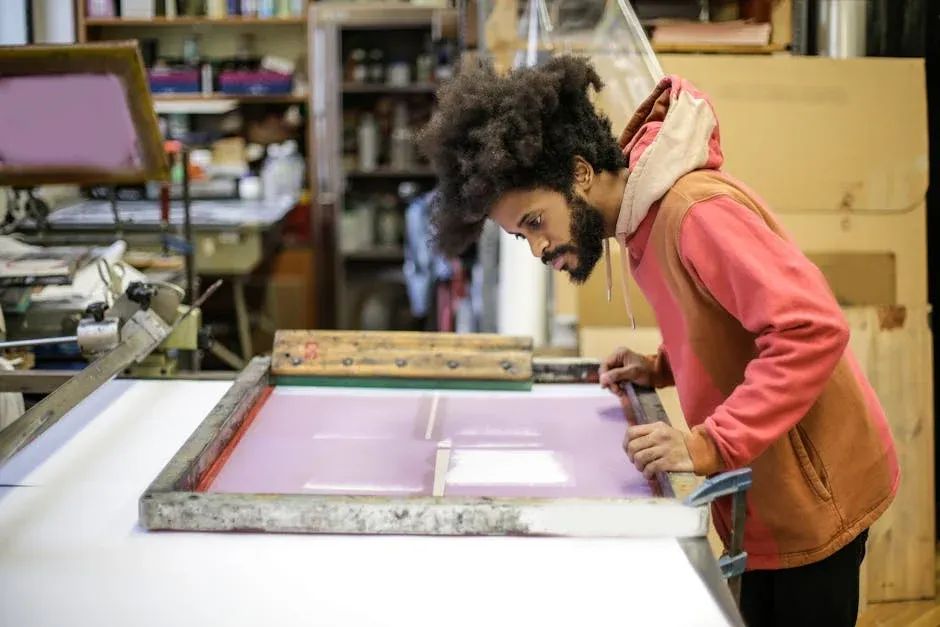
Screen printing is the gold standard of the apparel industry and has been for decades. This process involves creating a physical mesh stencil (or screen) for each color in your design. Ink is then pushed through the screen onto the garment using a squeegee.- Best Fabric Match: Screen printing is incredibly versatile and works beautifully on cotton, polyester, blends, and even nylon.
- Pros: Unmatched durability and color vibrancy. Because thick plastisol or water-based inks are layered onto the fabric, the designs remain bold and bright for years. It is also the most cost-effective method for bulk orders; once the screens are set up, printing hundreds of shirts is incredibly fast.
- Cons: High setup costs make it impractical for small orders. Because every color requires its own screen, simple designs are highly preferred. Most printers require a minimum order of at least 12 shirts to offset the labor of setting up the press.
To learn more about the history and mechanics of this classic technique, explore the traditional screen printing process.
Direct-to-Film (DTF) Shirt Printing
Direct-to-Film (DTF) is one of the most exciting innovations in modern shirt printing. In this process, your design is printed onto a special clear transfer film using vibrant digital inks. A lightweight adhesive powder is then applied to the back of the print and cured with heat. Finally, a commercial heat press is used to transfer the design from the film onto the shirt.- Best Fabric Match: Almost anything! DTF works on cotton, polyester, synthetic blends, fleece, and even heavy canvas.
- Pros: DTF prints are incredibly durable, often remaining bold and crack-free for over 50 washes. The colors are exceptionally vibrant, and the design sits on top of the fabric without the heavy, plastic feel of old-school vinyl transfers. There are no minimum order quantities, making it ideal for low-volume, high-color custom printed shirts and apparel.
- Cons: Because the design sits on top of the fabric as a thin film layer, it does not have the absolute breathability of DTG. Large, solid-block designs can feel slightly warm on hot Alabama summer days.
Custom Embroidery
If you want a premium, professional look that screams quality, custom embroidery is the way to go. Instead of using ink, this method uses high-speed, computerized sewing machines to stitch your design directly into the fabric using durable, vibrant threads.- Best Fabric Match: Heavyweight garments like polo shirts, hoodies, jackets, hats, and canvas bags. Lightweight t-shirts can sometimes pucker under the weight of heavy stitching.
- Pros: Extremely durable and professional. Embroidery won't crack, fade, or peel, making it perfect for corporate workwear and outerwear. It adds a premium, textured look that elevates your brand.
- Cons: Not suitable for complex designs with fine details, gradients, or photographs. Pricing is based on stitch count rather than color count, meaning highly filled-in, large designs can become expensive.
or details on the technical guidelines used by commercial embroiderers, check out the industry machine embroidery standards.
Designing and Preparing Your Custom Shirt
Creating a beautiful custom shirt starts long before the ink hits the fabric. A great print relies on a great design file.When designing your apparel, you have several placement options to consider. While the classic "chest print" is the most popular, you can also place designs on the back, sleeves, or even create custom printed neck labels for a retail-ready finish.
If you are designing for a business, color accuracy is critical. To ensure your logo looks exactly the same on your shirts as it does on your business cards, we recommend using Pantone or HEX codes. This allows our printing systems to match your brand colors perfectly.
File Formats and Print-Ready Guidelines
To get the crispest, cleanest print possible, your design files must meet specific technical standards.Use Vector Files Whenever Possible: Files ending in .AI, .EPS, or .PDF are vector files. These are made of mathematical paths rather than pixels, meaning they can be scaled up to the size of a billboard or shrunk down to a sleeve print without losing a single drop of quality.
High-Resolution Raster Files: If you are printing a photograph or digital painting, you will need to use a raster file like a .PNG or .TIFF. Ensure your file is exported at a minimum of 200 DPI (dots per inch) at the actual size you want it printed. Low-resolution images found on search engines will look blurry and pixelated when printed on fabric.
Color Profiles (RGB vs. CMYK): For digital printing methods like DTG and DTF, we recommend saving your files in the sRGB color profile. For traditional screen printing, CMYK is often preferred.
All-Over Prints: If you are designing an all-over print shirt, the fabric is typically printed before it is cut and sewn. Keep your critical design elements away from the seams to avoid them being cut off during production.
What to Do If Your Design Isn't Print-Ready
Don't panic if you aren't a graphic design wizard! Many of our customers in Hanceville and Dodge City come to us with rough sketches, low-resolution JPEG logos, or just a solid concept in their heads.If your design isn't print-ready, we can help. Our team can assist with image enhancement, converting low-quality images into clean vector files, and preparing your artwork so it prints beautifully. You don't need expensive software to design custom t-shirts online—just bring us your ideas, and we will handle the technical heavy lifting.
Ordering, Costs, and Turnaround Times
Navigating the logistics of ordering custom apparel doesn't have to be stressful.Whether you need a single shirt for a special gift or hundreds of uniforms for your local business, understanding how pricing and production times work will help you plan your project perfectly.
Pricing and Hidden Fees
At The Vinyl Frontier, we believe in transparent, upfront pricing. The cost of your custom shirt depends on a few straightforward factors:- The Blank Garment: Budget-friendly options like Gildan are highly affordable, while premium, ultra-soft brands like Bella+Canvas or Comfort Colors cost a bit more.
- Number of Print Locations: Printing on just the front of the shirt is the most budget-friendly option. Adding prints to the back, sleeves, or inner labels will increase the base cost.
- Volume Discounts: The more you order, the less you pay per shirt. Bulk discounts often kick in at key breakpoints (such as 12, 24, 36, or 100+ pieces).
- No Hidden Fees: We don't believe in surprising you at checkout. There are no hidden "setup fees" or "screen charges" buried in our quotes.
Turnaround and Delivery Times
We know that when you order custom shirts, you want them fast. Our standard turnaround time for most custom apparel orders is highly competitive, with many digital printing orders ready in just a few business days.Because we are located right here in Hanceville, AL, you don't have to worry about long shipping delays or paying exorbitant rush fees to online-only print shops. You can easily stop by for local pickup, or we can arrange fast delivery to your door. Plus, once we have printed your design, we keep your digital files secure on record, making future reorders incredibly fast and simple.