
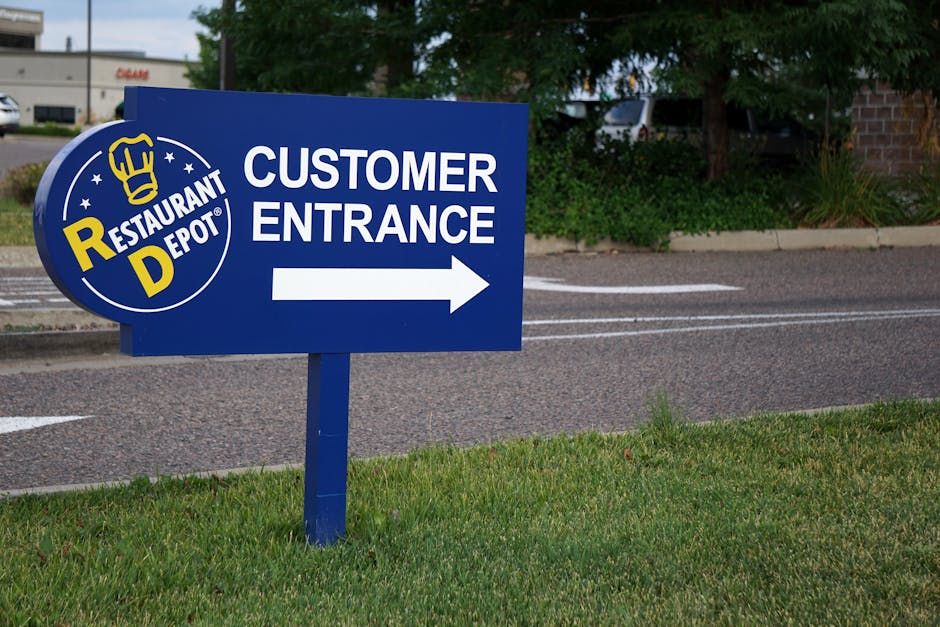
Exterior Directional Signage: Guiding Visitors with Ease
What Is Exterior Directional Signage (and Why It Matters for Your Business)
Exterior directional signage refers to outdoor signs that guide people to a destination, through a space, or toward a specific area — think parking lot arrows, entrance markers, and wayfinding signs at business parks or events.
Here's a quick breakdown of what these signs do:
- Guide visitors to entrances, parking, exits, and key locations
- Reduce confusion so people don't wander or leave out of frustration
- Improve safety by managing foot and vehicle traffic flow
- Reinforce your brand through consistent colors, fonts, and design
- Meet compliance standards like ADA/AODA for accessible navigation
Poor signage costs you customers. When someone can't find your entrance or parking, they may simply leave. Good exterior directional signage removes that friction before it becomes a problem.
Wayfinding signs generally fall into four main categories:
TypePurposeExampleIdentificationNames a place or space"Main Office" sign
DirectionalPoints toward a destinationArrow signs, "Parking This Way"
InformationalShares relevant detailsHours, maps, rules
RegulatoryCommunicates rules or restrictions"No Entry," "Staff Only"
Directional signs are the connective tissue of the entire wayfinding system — they lead people to the identification signs at their destination.
At The Vinyl Frontier, we bring high-quality custom signage expertise to businesses that need to make a strong first impression, including designing and producing professional exterior directional signage that works as hard as you do. Whether you're guiding customers to your storefront or managing traffic at a large event, we've got the experience and craftsmanship to get it right.
Primary Purposes of Exterior Directional Signage
When we think about exterior directional signage, we aren't just thinking about a piece of metal with an arrow on it. We are thinking about the invisible hand that guides a driver safely into a parking spot or a pedestrian toward a hidden office entrance. The primary purpose is navigation, but the impact reaches much further into safety, efficiency, and brand perception.Effective signage manages the flow of traffic. In a busy business park in Hanceville or a retail center in Dodge City, clear markers prevent "bottlenecks" where drivers stop to look for a building number. By providing Facility Guidelines for Exterior Wayfinding, businesses can ensure that both vehicular orientation and pedestrian guidance are seamless.
Safety is another critical factor. When a driver is frustrated or lost, they are distracted. Proper directional signs reduce that frustration, allowing drivers to focus on the road and pedestrians to stay in designated walkways. From a site efficiency standpoint, well-placed signs ensure that delivery drivers find loading docks quickly and visitors find the main lobby without circling the block three times.
Enhancing the Customer Journey with Exterior Directional Signage
The customer journey begins long before a client shakes your hand; it starts the moment they pull onto your property. If they feel lost or confused, their stress levels rise, and their opinion of your professionalism drops. Clear, high-quality exterior directional signage reinforces your brand's reliability. It says, "We have thought about your needs and made it easy for you to be here."Consistency is key here. By using our custom sign services, you can ensure that your directional signs match your primary storefront sign in color, font, and style. This brand reinforcement builds trust. Clear communication through signage is a form of customer service that works 24/7, providing reassurance and guidance even when your doors are locked.
Strategic Placement for Maximum Visibility
A sign is only as good as its visibility. At The Vinyl Frontier, we emphasize the "decision point"—that specific spot where a visitor has to choose to go left, right, or straight. This is where your sign needs to be.Key factors for placement include:
- Sightlines: Ensuring the sign isn't hidden behind a tree, a dumpster, or a parked truck.
- Viewing Distance: A sign meant for drivers moving at 45 mph needs to be much larger and placed further back than a sign for someone walking on a sidewalk.
- Approach Speeds: The faster the traffic, the earlier the sign must appear to give the driver time to react.
- Obstruction Avoidance: We conduct site surveys to ensure that seasonal changes (like growing foliage) won't block your message.
Durable Materials for Outdoor Wayfinding
Choosing the right material for your exterior directional signage is the difference between a sign that lasts a decade and one that fades in a single Alabama summer. We consider weather resistance, UV protection, and thermal expansion (how much the material grows or shrinks in the heat).MaterialBest ForDurabilityKey FeatureCoroplastTemporary events, yard signsShort-term (1-3 years)Lightweight & Waterproof
AluminumPermanent road or wall signsLong-term (10+ years)Rust-free & Rigid
ACMHigh-end business directoriesLong-term (10+ years)Superior flatness & Strength
Aluminum and ACM for Permanent Exterior Directional Signage
For businesses in Hanceville and Dodge City looking for a permanent solution, we almost always recommend Aluminum or Aluminum Composite Material (ACM). Standard aluminum signs, typically 1.2mm (0.05") thick, are industry favorites because they are naturally rust-free and handle extreme temperatures without warping.ACM is a "sandwich" panel—two thin sheets of aluminum bonded to a solid polyethylene core. This makes the sign incredibly rigid and flat, preventing the "oil canning" or waving effect you sometimes see on cheaper, large-scale signs. These can be finished with an anodized coating or high-quality vinyl wraps to provide a professional, sleek look. Whether it's a post-and-panel sign at the entrance of a medical facility or a wall-mounted directory, these materials provide the structural integrity required for the long haul.
Coroplast and PVC for Temporary Event Signs
Sometimes, you don't need a sign to last forever. If you're hosting a weekend festival, a real estate open house, or a construction project, Coroplast is the way to go. It is essentially "plastic cardboard"—lightweight, waterproof, and very cost-effective.Because it's so light, it's perfect for yard stakes. We see these used frequently for home builder signage where directions to new subdivisions need to be updated or moved frequently. While it won't last ten years, it is the champion of short-term event parking and temporary directional arrows.
Key Features of High-Quality Directional Signs
What makes a sign "high-quality"? It’s more than just a pretty design. It’s about science—specifically the science of legibility. We follow MUTCD standards for guide signs to ensure that every sign we produce is functional.Key features include:
- Reflectivity: Crucial for signs that need to be read at night.
- Non-glare Coating: Prevents the sun from washing out the message during the day.
- High-Contrast Colors: Think white text on a dark green or blue background.
- Mixed-Case Lettering: Research shows that "Upper and Lower Case" is easier for the human brain to recognize at a distance than "ALL CAPS."
- Standardized Symbols: Using a universally recognized "P" for parking or a "Person in a Wheelchair" for accessibility ensures the message is understood instantly, regardless of language.
Compliance Standards: ADA and AODA Requirements
Accessibility isn't just a good idea; it's often the law. The Americans with Disabilities Act (ADA) sets specific standards for accessible signs. For exterior directional signage that identifies permanent rooms or spaces, you may need:- Tactile Characters: Raised letters that can be read by touch.
- Grade 2 Braille: Placed directly below the corresponding text.
- Specific Mounting Heights: Usually between 48 and 60 inches from the ground to ensure someone in a wheelchair can reach the tactile elements.
- Visual Contrast: A minimum level of contrast between the text and the background to help those with low vision.
While not all exterior signs require Braille (for example, a sign pointing to "Parking" usually doesn't), any sign marking a permanent exit or a specific room must comply. At The Vinyl Frontier, we help you navigate these regulations so your business stays compliant and welcoming to everyone.
Reflectivity and Nighttime Visibility
In rural areas or poorly lit parking lots, reflectivity is a safety requirement. We use "retroreflective" sheeting, which reflects light back to its source (like a car's headlights). This makes the sign "glow" in the dark without requiring expensive electrical wiring for internal illumination.From "Engineering Grade" for low-speed parking lots to "Prismatic Sheeting" for high-visibility road signs, choosing the right level of reflectivity ensures that your visitors can find their way safely, no matter what time of day it is.
Choosing the Right Design and Mounting Options
The design of your exterior directional signage should be a balance of aesthetics and function. You want it to look like it belongs with your building, but it also needs to stand out enough to be seen.Mounting options play a huge role in this:
- Wall-Mounted: Best for urban areas or entrances where space is limited.
- Projecting Signs: These stick out from the wall, making them visible to people walking or driving down a sidewalk.
- Ground-Staked: Ideal for temporary events or soft-ground areas.
- Pylon and Monument Signs: These are heavy-duty, freestanding structures that serve as major landmarks for a property.
When we help you choose, we look at the "Wind Load"—how much wind the sign will catch—and the viewing distance to ensure the mounting hardware is strong enough and the sign is positioned at the perfect angle.
Professional Customization vs. Off-the-Shelf Solutions
You can buy a generic "EXIT" sign at a big-box store, but it won't tell your brand's story. Professional customization allows for brand consistency across your entire property. If your logo uses a specific shade of "Frontier Blue," we can match it.Furthermore, custom solutions allow for modular systems. For instance, if you have a directory sign for an office building, we can design it with interchangeable elements. When a tenant moves out, you don't have to replace the whole sign—just one panel. This is why many businesses look for custom signs in Hanceville, AL rather than settling for generic options.
Installation and Maintenance for Longevity
Even the best sign will fail if it's installed poorly. For permanent ground signs, we use concrete footings and heavy-duty mounting plates to ensure they stay level and secure.Maintenance is surprisingly simple but often overlooked. We recommend:
- Regular Cleaning: Use mild soap and water with a soft, non-abrasive cloth. This prevents dirt and grime from "baking" into the finish.
- Inspections: Check the hardware once a year to ensure nothing has loosened due to wind or vibration.
- UV Protection: We use UV-resistant laminates on our printed graphics to prevent the sun from fading your colors, ensuring your investment looks great for years.
Frequently Asked Questions about Outdoor Directional Signs
How long do exterior directional signs typically last?
The lifespan depends heavily on the material and sun exposure.- Coroplast: Typically 1 to 3 years. It's great for temporary needs, but the plastic will eventually become brittle under intense UV rays.
- Aluminum/ACM: These are the "forever" signs. With high-quality vinyl and UV-resistant coatings, you can easily expect 10 to 15 years or more of service.
- PVC: Usually sits in the middle, lasting 5 to 7 years depending on thickness and finish.