
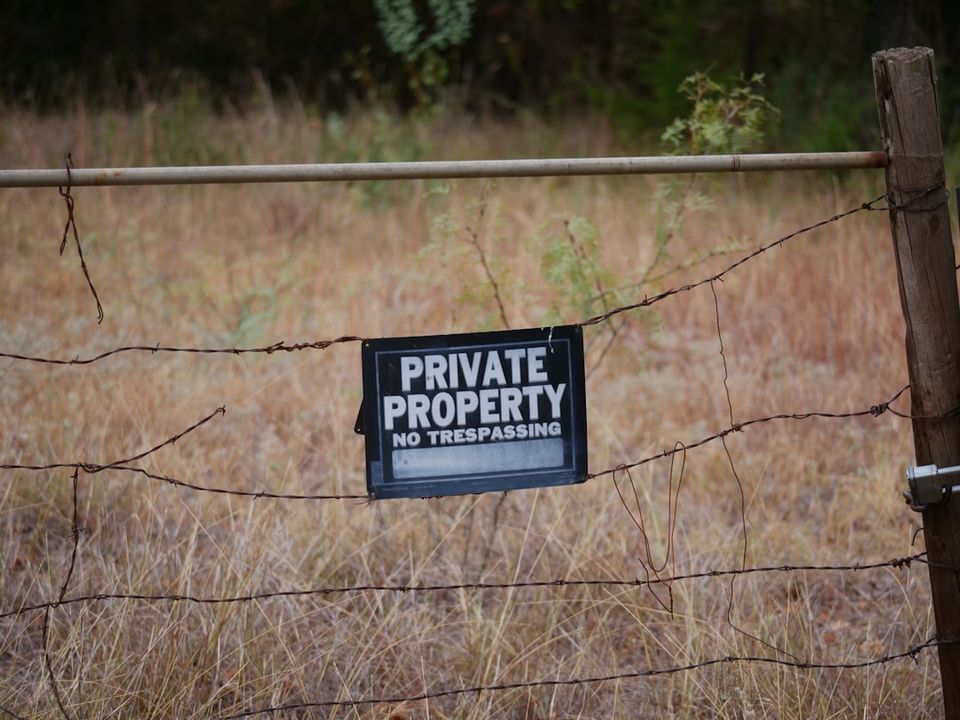
Property Patrol: What You Need to Know About No Trespassing Signs
Understanding No Trespassing Signs and Their Purpose
At its core, a no trespassing sign is a communication tool. It bridges the gap between your private property rights and the outside world’s perception of where they are allowed to go. Without a sign, a person might argue they didn't know they were on private land, especially in rural areas or on properties without physical barriers like fences.
These signs serve several critical functions:
- Defining Boundaries: They clearly mark where public space ends and your private domain begins.
- Establishing Legal Intent: In many jurisdictions, "notice" is a prerequisite for a trespassing charge. By posting a sign, you are providing that notice.
- Preventing "Effective Consent": If someone enters your land and you haven't told them they can't, they might claim they had "implied consent." A sign revokes that implication immediately.
- Safety Communication: Often, these signs are used to keep people out of dangerous areas, such as construction sites or farms with heavy machinery. For more information on how specialized signage keeps people safe, you can read The ABCs of CO2 Fire Extinguisher Signs: A Comprehensive Guide.
Whether you are protecting a quiet residential backyard in Hanceville, a commercial parking lot in Dodge City, or a sprawling farm across Alabama, these signs are your primary method of asserting control over your environment.
How No Trespassing Signs Deter Unwanted Visitors
The deterrent effect of a no trespassing sign is both psychological and practical. Psychologically, it creates a "hard" boundary. Most casual intruders—people looking for a shortcut or a place to loiter—are looking for the path of least resistance. A sign suggests that the property owner is vigilant and likely to take action, which is often enough to make a potential intruder choose a different path.Practically, it removes the "I didn't know" excuse. When a sign is conspicuously posted, an intruder knows they are breaking the law the moment they cross the line. This increases the "risk" factor for criminals or vandals, who prefer targets where they can claim accidental entry if caught.
Are No Trespassing Signs Effective Against Solicitors?
We often get asked if a no trespassing sign is better than a "No Soliciting" sign. The answer is usually yes. While soliciting is a form of commerce and not inherently a crime, trespassing is a crime.A "No Soliciting" sign specifically tells salespeople not to knock, but it doesn't necessarily forbid them from being on your driveway. A no trespassing sign, however, provides formal notice that unauthorized entry for any purpose is forbidden. This gives you a much stronger platform for police intervention if a solicitor becomes aggressive or refuses to leave.
Combining the two messages on a single sign—"No Trespassing, No Soliciting"—is the most effective way to ensure your privacy is respected by door-to-door sales crews.
Legal Enforceability and State-Specific Regulations
The legal weight of a no trespassing sign depends heavily on how well it complies with local laws. According to the Frequently Asked Questions - Law Enforcement (Trespassing), notice is the heart of a trespass case. If a property isn't fenced, signs are often the only way to prove a visitor knew they were unwelcome.In the eyes of the law, "notice" can take several forms:
Written Communication: This includes signs and letters.
Fencing: An enclosure obviously designed to exclude intruders.
Oral Warning: Telling someone to leave.
Cultivated Crops: In some states, visible crops serve as notice that the land is being used and entry is restricted.
When dealing with unwanted visitors, it is important to document the encounter. As noted in the guide for Dealing with Trespassers, collecting details like the time, a description of the person, and their location on your property is vital if you decide to report the incident to local authorities.
Compliance with State-Specific No Trespassing Signs
While we focus on serving our neighbors in Hanceville and Dodge City, AL, it’s fascinating to see how requirements vary. For example:- Texas: Uses a "Purple Paint" law where vertical purple stripes on trees or posts serve as legal notice.
- New York: Requires signs to be at least 11" x 11" with the word "POSTED" covering at least 80 square inches.
- Nevada: Specifies that signs must be placed at intervals of no more than 500 feet.
- Maryland: Has strict penalties that escalate for repeat violations, including potential prison time.
In Alabama, the general rule is that signs must be "reasonably likely to come to the attention of intruders." This means they must be conspicuous and legible.
The Role of Notice in Trespass Law
For a sign to be legally enforceable, it must establish what the law calls "prima facie evidence of notice." This means that at first glance, any reasonable person would understand they are not allowed to enter. If your sign is hidden behind a bush or the letters have faded to the point of being unreadable, a judge may rule that you failed to provide adequate notice, making it difficult to prosecute a trespasser.Choosing High-Quality No Trespassing Signs: Materials and Features
When you invest in property protection, you want a sign that lasts longer than a single season. At The Vinyl Frontier, we’ve seen what the Alabama sun and humidity can do to cheap signs. That’s why we emphasize material choice.FeatureAluminumPlastic (Styrene/PVC)ACM (Aluminum Composite)DurabilityHigh (10-12 years)Moderate (3-5 years)Highest (12-15 years)
RustproofYesYesYes
VisibilityExcellent (Reflective)GoodExcellent
Best ForPerimeter FencesTemporary UseHigh-End Residential
Key Features for Maximum Visibility
Visibility isn't just about daytime reading; it's about 24/7 protection.- Reflective Sheeting: We recommend Engineer Grade (EG) or High-Intensity Prismatic (HIP) sheeting. This ensures that when a car's headlights or a trespasser's flashlight hits the sign, it glows brightly.
- Contrast Ratios: A 70% luminance difference between the text and the background is the industry standard for readability. This is why you almost always see white or yellow text on a red or black background.
- Letter Height: A good rule of thumb is 1 inch of letter height for every 50 feet of viewing distance. If your sign is 100 feet from the road, your letters should be at least 2 inches tall.
Stock vs. Designer and Specialty Sign Styles
Not every no trespassing sign needs to look like it belongs on a military base.- LawnBoss: These signs come with integrated stakes, making them perfect for front yards where you don't want to mount anything to a wall or fence.
- GardenBoss/Plaques: For a more aesthetic look, cast aluminum plaques offer a "designer" feel that fits well with high-end landscaping while still providing clear notice.
- Bilingual Options: In areas with diverse populations, bilingual signs remove the "I couldn't read the language" defense.
- Novelty Signs: Sometimes humor is the best deterrent. Signs like "No Trespassing: We're tired of hiding the bodies" can get the point across with a smile, though they may carry less weight in a formal courtroom setting.
Strategic Placement: How Many No Trespassing Signs Do You Need?
A single sign at your front gate is a start, but it might not be enough for full legal protection. According to the Frequently Asked Questions: Hanging No Trespassing Signs, the number of signs depends entirely on the layout of your land.Visibility Checklist:
- Are all road entrances covered?
- Are there signs at every gate or trailhead?
- If your property borders water, is there a sign visible from the shoreline?
- Can a person walking along your property line see at least one sign at any given time?
Optimal Height and Spacing for Signage
For maximum effectiveness, signs should be mounted at eye level—typically 5 to 6 feet above the ground. This ensures they are in the natural line of sight for someone approaching on foot or in a vehicle.Regarding spacing, while some states have specific laws (like the 660-foot maximum in New York), a more effective strategy for private homeowners is placing signs every 100 to 150 feet along vulnerable boundaries. This creates a "wall" of notice that is impossible to miss.
Installation Best Practices for Longevity
How you mount your sign is just as important as the sign itself.- Pilot Holes: Always pre-drill holes if you are mounting to wood to prevent the post from splitting.
- Aluminum Nails: If you are mounting to trees, use aluminum nails. They are safer for the tree and won't damage chainsaws if the tree is ever harvested.
- Anti-Vandal Hardware: Use one-way bolts or tamper-proof Torx screws to prevent intruders from simply unscrewing your signs and throwing them away.
Customization and Creative Sign Combinations
One size rarely fits all. At The Vinyl Frontier, we take pride in offering Custom Signs, Wraps, Banners, Decals and Shirts in Hanceville, AL.Customization allows you to address specific problems, such as "No Hunting," "No ATV Riding," or "Private Beach - No Public Access."
Popular Security Pairings
Combining your no trespassing signs with other warnings creates a "layered" security profile.- Video Surveillance: This is the #1 pairing. Telling someone they are being recorded significantly increases the psychological deterrent.
- Beware of Dog: Even if your "guard dog" is a friendly golden retriever, the sign creates hesitation.
- Authorized Personnel Only: Great for businesses or farms where you have employees but want to keep the general public out of work zones.