Stop Being Transparent and Start Using Commercial Window Lettering
Why Your Storefront Windows Are Your Most Underused Marketing Tool
Commercial window lettering is one of the most cost-effective ways to turn your storefront windows into a 24/7 marketing tool — and most local businesses aren't using it.
Here's a quick breakdown of what it is and why it matters:
- What it is: Custom vinyl letters and text cut precisely and applied directly to glass surfaces
- Who it's for: Retail stores, offices, restaurants, salons, and any business with street-facing windows
- What it does: Displays your business name, hours, promotions, or contact info clearly and professionally
- How long it lasts: Anywhere from 3 to 8 years depending on the vinyl grade and installation quality
- Cost: Starts as low as $14–$37 per piece, with bulk discounts available
- DIY-friendly: Yes — most products ship with transfer tape and simple instructions
Your windows are visible every hour of every day. Yet many business owners leave them blank — missing a free advertising space right on their own building.
Think about it: a passing driver has only a split second to read your storefront. Clean, bold lettering on your window can communicate your brand instantly, without any ongoing cost or effort.
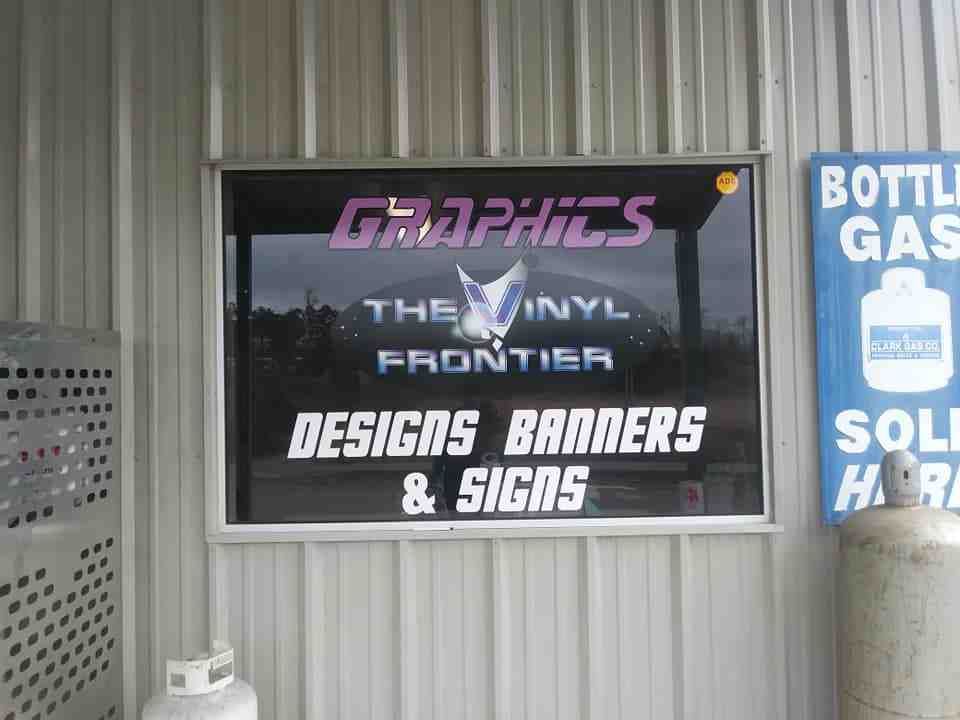
At The Vinyl Frontier, we've helped countless businesses across Hanceville, AL and beyond transform plain windows into powerful brand statements through custom commercial window lettering — it's one of our most popular and results-driven services. If you're ready to stop blending into the background, you're in the right place.
What is Commercial Window Lettering?
When we talk about Commercial window lettering, we aren't just talking about a standard sticker. This is a specialized form of signage where individual characters, numbers, or logos are precision-cut from a solid sheet of high-performance vinyl.Unlike a traditional decal that might have a clear or white square background, window lettering is "die-cut." This means once it is applied, the only thing left on your glass is the letters themselves. There is no background material to cloud your view or clutter the aesthetic. This creates a high-end, "painted-on" look that is far more professional than a simple printed sticker.
To make installation possible, these individual letters are held in place by "transfer tape." This is a translucent top layer that keeps all your letters perfectly spaced and aligned while you press them onto the glass. Once the adhesive bonds, you peel away the tape, leaving behind perfectly positioned text.
How it Differs from Standard Window Graphics
It is easy to get confused by the different terms in window signage.Here is how we distinguish Commercial window lettering from its cousins:
- Vinyl Lettering: Individual characters cut from colored vinyl. No background. Best for store hours, names, and clean branding.
- Printed Decals: A single piece of vinyl with an image printed on it. It usually has a background (opaque or clear). Great for complex logos with gradients.
- Static Clings: These use "suction" rather than adhesive. They are great for very temporary promotions (like a weekend sale) but aren't durable enough for long-term commercial use.
FeatureWindow LetteringPrinted DecalsStatic ClingsMaterialDie-cut solid vinylPrinted vinyl sheetNon-adhesive vinyl
BackgroundNone (transparent)Opaque or ClearUsually Clear
DurabilityHigh (3-8 years)Moderate (2-5 years)Low (Temporary)
Best UseProfessional brandingFull-color logosShort-term sales
If you want to dive deeper into how these compare specifically for branding, check out our guide on Everything You Need to Know About Business Logo Decals.
Common Applications for Business Windows
In our experience serving the Hanceville and Dodge City areas, we see businesses use window lettering for a wide variety of tasks. It isn't just for the front door!Store Hours: The most common use. It keeps customers informed even when you’re closed.
Business Names and Logos: Large-scale lettering across the main window to establish your presence.
Promotional Messaging: Words like "SALE," "NOW OPEN," or "NEW MANAGEMENT" in high-contrast colors.
Suite Numbers: Essential for offices in multi-tenant buildings so clients can find you easily.
Contact Information: Your phone number, website, or social media handles.
Safety and Compliance: Required "Push/Pull" signs or ADA-compliant information.
Benefits of Commercial Window Lettering for Your Business
Why should you choose lettering over a traditional hanging sign or a full window wrap? The benefits are surprisingly practical.- 24/7 Visibility: Even when your lights are off, high-contrast vinyl (especially white or reflective options) can catch the light from street lamps or passing cars, keeping your brand visible.
- Cost-Effectiveness: Compared to a lighted channel letter sign or a full-color digital display, vinyl lettering is incredibly affordable. You get a professional look for a fraction of the price.
- Minimalist Design: It provides information without blocking the "eyes" of your store. You can still see out, and customers can still see in, which is vital for retail security and inviting foot traffic.
- Natural Light Preservation: Unlike full-coverage perforated film, lettering only covers a small percentage of the glass. This means your interior stays bright and airy.
- Ease of Updates: If your hours change or you get a new phone number, you don't have to replace a whole sign. You can simply peel off the old digits and apply new ones.
For more inspiration on how to use these tools effectively, take a look at our Easy Business Sign Design Ideas.
Maximizing Storefront Visibility with Commercial Window Lettering
To get the most out of your investment, you need to think like a customer walking or driving by.Contrast is King: This is the most important rule. If you have tinted windows (which most commercial buildings do), black or dark blue lettering will disappear completely. We almost always recommend white or bright yellow for maximum readability. White pops against the dark reflection of the glass.
The "Rule of 10": A good industry standard is that for every 10 feet of viewing distance, your letters should be at least 1 inch tall. If you want people driving by at 35 mph to read your phone number, those letters should be at least 3 to 4 inches tall.
Versatility Across Different Surfaces
While we call it "window lettering," this material is quite the overachiever. It bonds to almost any smooth, non-porous surface. We frequently install it on:- Glass Doors: Perfect for branding and entry instructions.
- Office Mirrors: Great for high-end salons or boutiques to add a touch of class.
- Vehicle Windows: Turn your work truck into a mobile billboard.
- Smooth Interior Walls: Ideal for reception areas or mission statements on drywall (provided the paint is cured and smooth).
If you are looking for something larger than window text, you might be interested in Understanding 4x8 and 3x4 Vinyl Banner Options for your next big event.
Customization and Material Specifications
At The Vinyl Frontier, we believe the quality of the material determines the success of the sign. We use premium vinyl series, such as the LG LC-2000 series or Avery premium films, which are designed specifically for commercial use.The Technical Details
- Weight: Typically 3.5 oz tear-resistant vinyl.
- Material Type: Monomeric or Polymeric opaque vinyl.
- UV Resistance: Our materials are treated to resist fading from the harsh Alabama sun.
- Thickness: Standard 2.5 mil to 3.5 mil, providing a low profile that looks integrated into the glass.
Cast vs. Calendared Vinyl
This is a common question.- Calendared Vinyl is thicker and more affordable. It’s perfect for flat windows and usually lasts about 3-5 years.
- Cast Vinyl is the "premium" choice. It is thinner, more conformable (great for rivets or curves on vehicles), and has a much longer lifespan—often up to 8 years. It also has less "shrinkage" over time, meaning you won't get those annoying sticky outlines around your letters after a few summers.
Choosing the Right Colors and Fonts for Commercial Window Lettering
When designing your lettering, keep it simple. While we offer over 21 colors and hundreds of fonts, "fancy" isn't always "better."Font Choice: Avoid overly script-heavy or "thin" fonts. A font with a minimum thickness of 0.09" for all strokes ensures that the vinyl has enough adhesive surface area to stay stuck for years. Sans-serif fonts like Helvetica or Arial are classics for a reason—they are legible from a distance.
File Preparation: For the sharpest results, we use vector files (.AI, .PDF, or .EPS). Unlike a regular photo (JPEG), a vector file can be scaled to the size of a skyscraper without losing any quality. This ensures our computer-controlled plotters cut your letters with laser precision.
Standard vs. Inside Glass Application
You have two choices for where the vinyl physically sits:Standard Cut (Exterior): The vinyl is applied to the outside of the glass. This is the most common method. It offers the best visibility because there is no glass reflection in front of the color.
Reverse Cut (Inside Glass): The letters are cut in "mirror image" and applied to the inside of the window facing out. This is a great option if you are worried about vandalism or if you want to protect the vinyl from extreme weather. However, keep in mind that tinted glass can make inside-applied lettering much harder to see.
Professional DIY Installation and Maintenance
Many of our clients in Hanceville choose to install their Commercial window lettering themselves to save on labor costs. It is a straightforward process, but it does require patience and a steady hand.Step-by-Step Application Process
Before you start, make sure the temperature is between 50°F and 90°F. If the glass is too hot, the adhesive will grab too quickly; if it’s too cold, it won't bond at all.Clean the Surface: This is 90% of the job. Use a non-ammonia glass cleaner or rubbing alcohol. Any leftover grease or dirt will cause the vinyl to peel.
Alignment: Use masking tape to create a "hinge." Tape the top of your graphic to the window once you have it perfectly leveled.
The Peel: Flip the graphic up, and slowly peel away the wax liner (the bottom layer).
The Squeegee: Lower the graphic slowly. Using a professional squeegee (or a credit card wrapped in a soft cloth), start from the center and move outward with firm, overlapping strokes.
Remove Transfer Tape: Wait a few minutes, then peel the top transfer tape back at a 180-degree angle (flat against itself). If a letter starts to lift, stop and squeegee it down again.
For a visual guide, we recommend checking out this video on how to install vinyl lettering or downloading these detailed vinyl lettering instructions.
Ensuring Longevity and Proper Care
Once installed, your lettering is quite hardy, but it still needs a little love.- Curing Time: Give the adhesive 48 to 72 hours to fully bond before cleaning the window.
- Cleaning: Use a soft cloth and mild soapy water. Avoid power washers or abrasive scrubbers, which can catch the edges of the letters and lift them.
- Removal: When it’s time for a change, a little heat from a hair dryer will soften the adhesive, allowing you to peel the letters off. Any remaining residue can be cleaned up with a citrus-based adhesive remover.
Frequently Asked Questions about Window Lettering
Can window lettering be used on vehicles or walls?
Absolutely. For vehicles, we recommend "Cast" vinyl because it handles the vibration, wind, and curves better than standard calendared vinyl. For walls, we use a specific "low-tack" adhesive vinyl that won't damage your paint when you decide to remove it. As long as the surface is smooth and non-porous (no brick or unfinished wood), it should stick beautifully.How do I prepare my design files for the best results?
The best results come from vector graphics. If you are designing in Canva or Illustrator, ensure your fonts are "outlined" (converted to shapes) so the computer knows exactly where to cut. If you only have a low-resolution JPEG, don't worry—our team at The Vinyl Frontier can often recreate your logo in a cut-ready format for a small fee.What factors influence the pricing of custom lettering?
Pricing is generally determined by:- Total Area: The height and width of the entire design.
- Vinyl Grade: Standard vs. Premium Cast vs. Specialty (like gold leaf or reflective).
- Quantity: We offer significant discounts for bulk orders (e.g., if you are outfitting a fleet of five trucks or three storefront locations).
- Complexity: Very tiny letters (under 1/4 inch) require more "weeding" time (removing the excess vinyl) and may cost slightly more.