
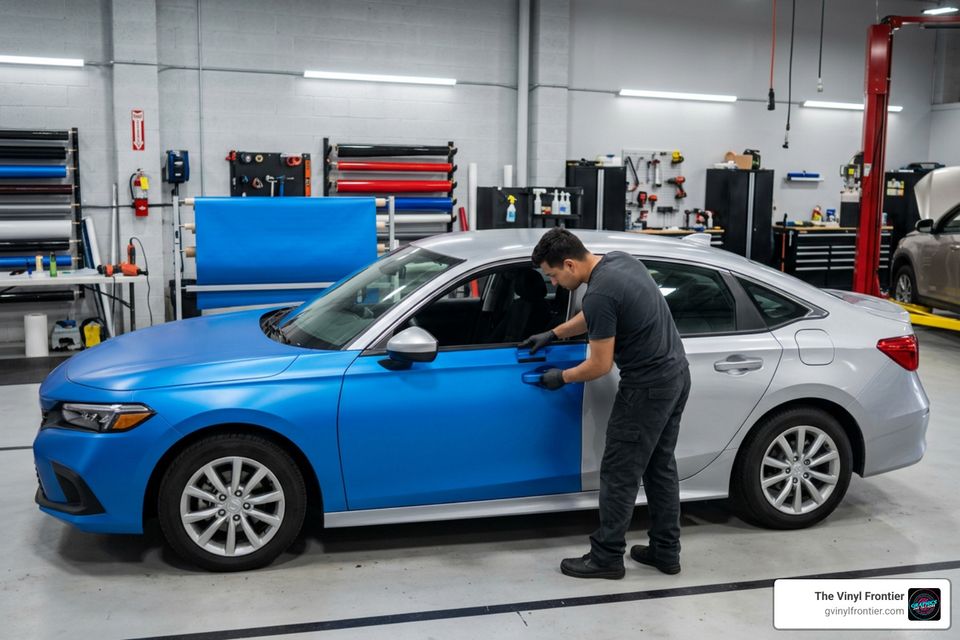
Car Wrap Price Factors: What You Can Expect to Pay for a Fresh Look
Car Wraps Price: A Quick 2026 Cost Snapshot
Car wraps price typically ranges from $2,500 to $7,000 for a professionally installed full wrap on a standard sedan, crossover, or SUV in 2026. Your final quote depends most on vehicle size, vinyl finish, paint condition, design needs, and the skill level of the installer.
Wrap typeTypical price rangeBest forAccent wrap$150-$700 per elementMirrors, roof, hood, spoilers, trim
Partial wrap$600-$2,200A bold look or business branding on a budget
Full wrap, compact car$2,500-$3,800Color changes for cars such as compact sedans
Full wrap, sedan or small SUV$3,000-$4,800Complete style change and paint protection
Full wrap, large SUV or truck$4,000-$6,500+Larger panels and more material
Exotic or custom graphic wrap$6,000-$15,000+Specialty finishes, complex bodywork, or custom designs
Standard gloss, matte, and satin films are usually the most cost-effective full-wrap options. Chrome and color-shift vinyl can raise the price by roughly 20% to 40% or more, while quality paint preparation, removal of an old wrap, and custom artwork can add to the total.
For a local business, a partial branded wrap can be a practical starting point: it puts your name, services, and contact details in front of people wherever your vehicle travels without the cost of full coverage. A full wrap makes the biggest visual statement, but the best value is the option that fits your goals, vehicle, and expected ownership period.
At The Vinyl Frontier, we create custom signs, banners, promotional graphics, and vehicle wraps designed to make businesses more visible. Our experience with car wraps price helps clients weigh finish, coverage, durability, and design before investing in a fresh look.
Average Car Wraps Price Breakdown by Vehicle Type and Coverage
When you begin evaluating vehicle wrap pricing, the physical size and shape of your car play a massive role in the final bill. Wrapping a compact two-door coupe requires significantly less film and labor than transforming an extended-cab dually truck or a tall commercial box van.On average, a compact car requires 50 to 55 linear feet of vinyl, standard sedans take roughly 60 to 70 feet, and large SUVs or full-size trucks need 75 to 90+ feet. Beyond physical material volume, body panel geometry dictates how many hours installers must spend stretching, tucking, and heating film over severe contours.
Vehicle ClassPartial Coverage CostFull Wrap Cost (Standard Finish)Full Wrap Cost (Specialty Finish)Average Material NeededCompact Sedan / Hatchback$600 – $1,400$2,500 – $3,800$3,500 – $5,20050 – 55 sq. ft. equivalent
Mid-Size Sedan / Small Crossover$700 – $1,600$3,000 – $4,600$4,200 – $6,00060 – 68 sq. ft. equivalent
Full-Size Truck / Large SUV$800 – $2,200$4,000 – $6,500$5,500 – $8,500+75 – 90+ sq. ft. equivalent
Commercial Van / Box Truck$800 – $2,500$3,000 – $7,000$4,500 – $9,500+80 – 120+ sq. ft. equivalent
Exotic / Luxury Sports Car$1,000 – $3,000$4,500 – $7,500$6,000 – $15,000+60 – 75 sq. ft. equivalent
Understanding Full Car Wraps Price Range for Sedans, SUVs, and Trucks
To understand how much a car wrap costs, it helps to see how labor splits across different vehicle builds:- Compact Cars & Small Sedans: Vehicles like a Honda Civic or Toyota Corolla have manageable surface areas and standard bumpers. A full color change with standard gloss or satin film usually lands between $2,500 and $3,800.
- Mid-Size Sedans & Crossovers: Vehicles with longer rooflines and wider doors require more film and detail work. Expect standard finishes to run between $3,000 and $4,600.
- Full-Size Trucks & Large SUVs: Full-size trucks and three-row SUVs feature deep body line recesses, wide hoods, tall roofs, and intricate front grilles. Installation labor increases significantly, driving full wraps into the $4,000 to $6,500+ bracket.
- Commercial Cargo Vans & Box Trucks: Commercial vehicles carry wide, vertical panels that act as rolling billboards. A standard cargo van wrap ranges from $3,000 to $5,500, while large box trucks requiring extensive graphic printing and installation can run from $6,000 to $12,000+.
- Exotics & Luxury Vehicles: Supercars feature sharp aerodynamic intakes, lightweight carbon-fiber panels, and complex curves. Installers assume far greater liability working around these delicate parts, placing specialty exotic wraps in the $6,000 to $15,000+ range.
Partial Wraps vs. Full Wraps: Evaluating Your Car Wraps Price
If a complete bumper-to-bumper color change pushes beyond your current budget, a partial wrap offers an unbeatable return on investment.Partial wraps allow you to target key high-visibility areas while keeping raw material and installation costs down. You can check out our resource on custom vinyl wraps to see creative ways drivers style their rides.
- Roof Wraps ($300 – $600): Applying gloss black vinyl to a vehicle's roof creates a sleek panoramic glass visual effect that contrasts beautifully with lighter paint shades.
- Hood Accents ($400 – $700): Hood wraps using carbon fiber, satin black, or matte textures provide immediate sporty styling and protect the engine lid from flying road gravel.
- Mirror Caps & Trim Elements ($150 – $300 per pair): Wrapping side mirrors, rear spoilers, or undertaking a full "chrome delete" (covering factory chrome trim with gloss or matte black) delivers a modern blackout aesthetic for under $1,000 total.
- Commercial Partial Coverage ($800 – $2,200): For local business owners, applying custom partial coverage over the rear doors and side panels provides clear company branding, contact details, and phone numbers at less than half the cost of a full vehicle wrap. For additional information, explore this car wrap cost breakdown.
Key Factors That Impact Your Vehicle Wrap Costs
Why do two vehicle wrap quotes look completely different? When you break down a wrap quote, raw materials represent about 30% to 40% of the cost, while skilled labor accounts for the remaining 60% to 70%.Material Finishes, Vinyl Quality, and Lifespan
Vinyl films are not created equal. The manufacturing method used to create the material dictates how long the wrap will survive under intense sun exposure and outdoor environmental weather.- Calendared Film vs. Cast Film: Calendared vinyl ($1.00 – $2.00 per sq. ft. raw material cost) is thicker, stiffer, and manufactured by rolling vinyl PVC through heavy rollers. It works well on flat commercial signboards or short-term flat vehicle panels, but carries a high memory retention that causes it to shrink, crack, or pull out of deep curves after 2 to 3 years. Premium Cast vinyl ($2.50 – $4.00+ per sq. ft. raw) is poured as a liquid and baked, producing a stress-free film that stretches smoothly over tight contours and resists shrinking, lasting 5 to 7 years.
- Standard Finishes (Gloss, Matte, Satin): Basic solid color cast vinyls are the industry standard for durability and ease of installation. They represent the baseline price point for any full color change.
- Specialty Finishes (Metallic, Carbon Fiber, Brushed Metal): Textured and metallic films add 10% to 25% to raw material costs and demand extra care from installers to maintain pattern alignment across adjoining door panels.
- Color-Shift / Iridescent Films ($5.00 – $8.00+ per sq. ft. raw): Chameleon and color-shifting vinyl films change hues depending on light angles. These advanced multi-layer films add 20% to 35% to the overall job cost. Read The Ultimate Guide To Iridescent And Color Changing Car Wraps for a deep dive into these striking finishes.
- Chrome & Mirror Vinyl ($15.00 – $25.00+ per sq. ft. raw): Chrome is the most expensive and rigid vinyl film available. It carries zero tolerance for overstretching and easily discolors if heated incorrectly, adding 30% to 50%+ to standard labor and material costs. Total chrome wraps frequently run $6,000 to $10,000+.
Installer Expertise, Certification, and Regional Pricing Differences
Workmanship is where quality wrap investments pay off over the long haul. Skilled installers spend 15 to 25 hours on a single full-vehicle transformation.Certified installers (such as 3M Preferred or Avery Dennison Certified graphic installers) undergo rigorous testing to master surface decontamination, panel disassembly, tension-free stretching, knifeless tape cutting, and post-heating edge sealing.
Hiring a certified professional protects your manufacturer material warranty, whereas uncertified budget shops charging bottom-dollar rates often leave hidden razor blade score lines in your factory paint.
Regional economics also shape your quote. According to vehicle wrap cost analysis calculators, shop labor rates reflect local overhead expenses:
- Rural & Small Town Markets: Hourly labor rates range from $65 to $85 per hour.
- Suburban Markets: Hourly labor rates average $80 to $100 per hour.
- Major Metro Markets: High overhead and demand can push shop labor rates to $120 – $150+ per hour.
For drivers in our service area near Hanceville, AL, and Dodge City, AL, local labor rates provide access to premium professional installation without the extreme overhead markups common in dense metropolitan areas.
Car Wrapping vs. Traditional Painting: Comparing Costs and Value
Vehicle owners often wonder whether it is smarter to wrap or repaint a car. When comparing car wrap cost guides, the financial math strongly favors vinyl wraps for modern vehicles.Financial Math and Protection Benefits
A cheap, low-end paint job ($1,500 – $3,000) involves minimal preparation, overspray on trim, and thin clear coats that peel after a couple of years. A high-quality custom paint respray that involves stripping trim, sanding, priming, multi-stage color spraying, and clear coat polishing typically costs between $7,000 and $15,000+.In contrast, a top-tier cast vinyl wrap provides a flawless visual overhaul for $2,500 to $6,000, while offering distinct benefits:
Factory Paint Preservation: Vinyl acts as a sacrifices shield over your OEM clear coat, protecting it from minor gravel chips, bird droppings, road salt, and harsh sun fading. For drivers interested in ultimate surface protection, explore our guide on automotive paint protection options.
Reversibility & Resale Value Protection: Repainting a vehicle in a non-factory shade can hurt its resale value by turning off future buyers. A vinyl wrap is completely removable, allowing you to return the car to its original, preserved factory finish before selling or turning in a leased vehicle.
Advertising ROI for Businesses: For commercial operators, vehicle wraps double as round-the-clock marketing assets. Outdoor advertising studies reveal that a single wrapped service truck generates 30,000 to 70,000 daily visual impressions. Amortizing a $3,500 wrap over a 5-year useful life works out to under $2.00 a day for massive local brand exposure. Read more about the power of vehicle wrap advertising.
Hidden Expenses, DIY Risks, Maintenance, and Longevity
To avoid unexpected surprises, you must budget for the entire wrap lifecycle, including surface prep work, ongoing care, and eventual removal.Pre-Install Surface Prep, Old Wrap Removal, and Protective Coatings
Professional shops won't lay expensive vinyl over dirty or damaged surfaces. Additional work during surface preparation can affect your initial estimate:- Paint Correction ($200 – $600+): Vinyl film is extremely thin—it conceals color, but it magnifies surface texture. Scratches, rock chips, clear coat peeling, or rust bubbles will show right through the film. Deep scratches must be sanded smooth, and paint defects corrected before application.
- Old Wrap Removal ($500 – $1,500): If your vehicle currently has an aging vinyl wrap, removing it requires heat guns, specialized chemical adhesive removers, and labor. If the old film has aged past 7 years, baked-on adhesive can add hours of scraping labor.
- Ceramic Coating over Vinyl ($200 – $800): Applying a specialized hydrophobic ceramic coating over new vinyl repels water, blocks environmental road grime, and shields satin or matte finishes against UV fading. To discover more about keeping your finish pristine, read our car color protection guide.
Is DIY Wrapping Worth the Tooling, Time, and Risk?
Attempting to wrap your own car is a tempting way to trim labor costs, but the learning curve is steep. Here is what a realistic DIY wrap breakdown looks like:- Material Costs: $500 – $900 for a 50' x 5' roll of name-brand cast vinyl (3M or Avery Dennison).
- Specialized DIY Tooling ($100 – $300): Heat gun, felt-edge squeegees, knifeless tape, precision razors, 70% isopropyl alcohol, magnets, tucking tools, and edge-seal tape.
- Time Investment: 30 to 60 hours for beginners, compared to 16 to 24 hours for experienced pros.
The DIY Risks: Without professional practice, beginner wrappers frequently overstretch vinyl film, causing it to turn white or pull out of bumper recesses weeks later. Worse, inexperienced razor handling can slice through body paint down to bare metal, opening the door to hidden rust. A single misstep on a large panel can waste $200 worth of vinyl film in seconds. For most vehicle owners, professional installation saves time, stress, and costly mistakes.
Frequently Asked Questions about Car Wrap Costs
Does wrapping a car damage original factory paint or lower resale value?
When installed and removed properly by a trained professional, high-quality cast vinyl will not damage healthy factory paint. In fact, it protects original paint from light gravel chips, micro-scratches, and UV oxidation. By keeping the underlying OEM clear coat preserved underneath, wrapping helps maintain or even increase your vehicle's future trade-in value. However, if your car has repainted panels with poor clear coat adhesion or pre-existing rust, peeling can occur during vinyl removal.How long does a professional car wrap last before replacement?
A premium cast vinyl wrap (from leading manufacturers like 3M or Avery Dennison) lasts 5 to 7 years under normal driving conditions. Specialty finishes like chrome typically last 2 to 4 years due to sensitivity to direct sunlight. You can maximize your wrap's lifespan by hand-washing it regularly, avoiding automated wash stations with rigid bristle brushes, and applying UV-protectant sprays. Learn more about sun care for vehicle finishes in our car sunscreen protection breakdown.Is it worth traveling to a different city or region for a cheaper wrap quote?
While major metropolitan installers can charge higher labor rates, driving long distances to save a few hundred dollars on a budget quote is often counterproductive. Lowball quotes under $1,800 for a full wrap frequently point to cheap calendared film, skipped prep work, or rushed cut-in installations that peel quickly.Furthermore, if you need warranty touch-ups or edge repairs down the road, taking your vehicle back to a distant shop wastes valuable time and gas. Choosing a reputable local shop ensures easy access to warranty support and reliable customer care. If you are shopping around north Alabama, read our guide to choosing local vinyl wrap professionals.