Detailed Guide to Safety Signs
Why Safety Signs Are Essential for Every Workplace
Safety signs are standardized visual tools that warn workers and visitors about hazards, require specific actions, or prohibit dangerous behaviors in a given space.
Here's a quick breakdown of what you need to know:
Sign TypeColorShapePurposeDangerRed, black, whiteRectangleImmediate life-threatening hazard
WarningOrangeRectangleCould cause serious injury
CautionYellowRectangleMinor or moderate injury risk
MandatoryBlueCircleRequired action (e.g., wear PPE)
ProhibitionRedCircle with slashAction not permitted
EmergencyGreenSquare/RectangleExit routes and safety equipment
These signs aren't just helpful — in most workplaces, they're legally required under standards like OSHA 1910.145 and ANSI Z535.
Every year, unclear or missing hazard communication contributes to thousands of preventable workplace injuries. The International Organization for Standardization (ISO) specifically developed its safety sign standard to communicate hazard information with as few words as possible — because in a fast-moving environment, a clear symbol can save a life faster than a paragraph of text.
Whether you run a warehouse, a construction site, a retail shop, or a manufacturing facility, the right signs protect your people, protect your business, and keep you on the right side of the law.
At The Vinyl Frontier, we bring over 20 years of experience in vinyl and custom signage to help businesses like yours create durable, professional-grade safety signs that meet regulatory standards and hold up in demanding environments. Read on for everything you need to know before choosing, placing, or customizing signs for your facility.
Understanding the Core Types of safety signs
In workplace safety, a sign is much more than just a piece of plastic or metal on a wall. It is a vital component of a facility’s "visual DNA." Effective hazard identification relies on a system where colors and shapes tell a story before a worker even reads a single word. This is why standardized safety sign history and evolution has moved toward a more symbol-heavy approach over the last century.As we move through April 2026, the sheer variety of available safety communication is staggering. Modern catalogs offer over 15,000+ designs and more than 10,000+ unique legends to cover every conceivable scenario—from high-voltage warnings in an electrical room to "Slippery When Wet" floor stands in a lobby.
Prohibition and Mandatory safety signs
Think of these as the "Yes" and "No" of the safety world.Prohibition signs are easily recognized by their red circles with a diagonal slash. Their job is simple: stop a dangerous behavior before it starts. Common examples include "No Smoking," "No Open Flames," or "Do Not Enter." These are critical for protecting restricted areas and ensuring that unauthorized personnel don't wander into harm's way. If you are managing a commercial space, you might also want to learn more about No Trespassing signs to keep your perimeter secure.
Mandatory signs, on the other hand, are usually blue circles. These indicate a specific action that must be taken to stay safe. Most often, these relate to Personal Protective Equipment (PPE). If you see a blue circle with a stylized head wearing earmuffs, it means ear protection is required. These signs ensure that safety protocols are followed consistently, reducing the risk of long-term health issues or immediate injury.
Warning and Emergency safety signs
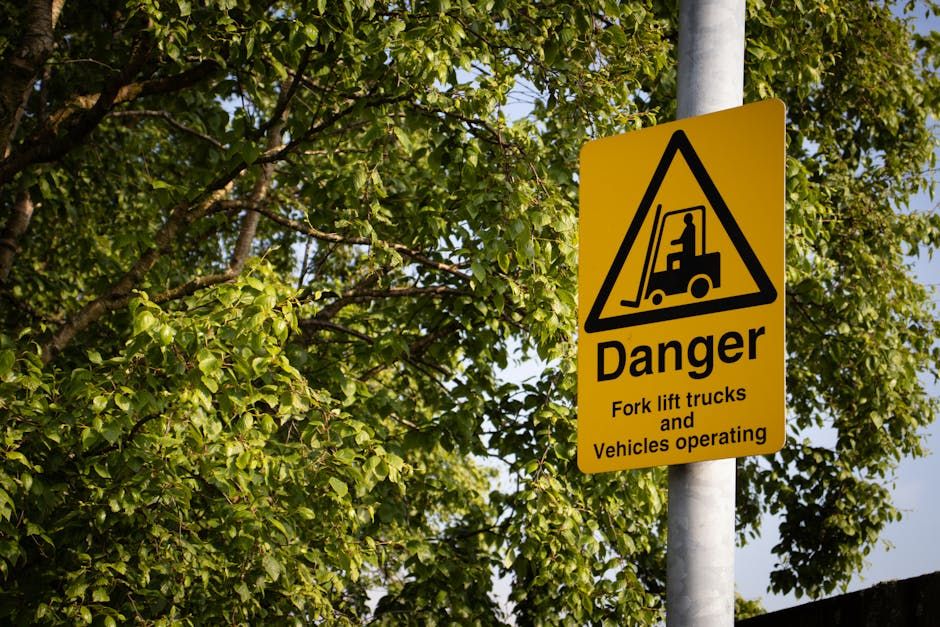
When the goal is to alert someone to a potential danger rather than give a direct command, we use Warning signs. These are characterized by yellow triangles with a black border.They notify people of hazards that might not be immediately obvious, such as "Deep Excavation," "High Voltage," or "Forklift Traffic."
Emergency signs are the "good news" signs. Usually green squares or rectangles, they point the way to safety. Whether it’s marking an exit route, a first aid station, or an emergency eyewash station, these signs need to be highly visible even in low-light conditions.
Fire safety signs also fall into a specialized category, often using red squares to denote the location of firefighting equipment. For those managing facility fire safety, we recommend checking out our comprehensive guide to CO2 fire extinguisher signs to ensure your equipment is properly marked.
Regulatory Standards: OSHA, ANSI, and ISO 7010
Navigating the alphabet soup of safety regulations can feel like a full-time job. However, staying compliant is non-negotiable for business owners in Hanceville and Dodge City. The two big names you’ll hear most are OSHA (Occupational Safety and Health Administration) and ANSI (American National Standards Institute).While OSHA provides the legal "teeth" through regulations like OSHA 1910.145 specifications for accident prevention, ANSI Z535 provides the technical "blueprint" for how the signs should actually look. Modern standards now allow for a combination of both, emphasizing clear signal words, headers, and pictograms.
Signal WordMeaningRisk LevelDANGERImmediate hazardWill result in death or serious injury
WARNINGPotential hazardCould result in death or serious injury
CAUTIONMinor hazardMay result in minor or moderate injury
NOTICEInformationRelated to property damage or general policy
With over 50,000+ stock options available in the industry today, finding a compliant sign is easier than ever, but understanding the hierarchy of these signal words is key to prioritizing your facility's safety needs.
GHS Pictograms and Chemical Hazards
If your business handles chemicals, you need to be familiar with GHS (Globally Harmonized System). These are the red diamond-shaped symbols that classify chemical risks. Whether it's a "Flame Over Circle" for oxidizers or the "Skull and Crossbones" for acute toxicity, these symbols are universal.OSHA’s Hazard Communication Standard requires these OSHA Hazard Communication pictograms to be on all chemical labels and relevant area signage. Furthermore, the ISO 7010 international graphical symbols ensure that even if a worker speaks a different language, they can immediately recognize a corrosive substance or an explosive hazard.
Strategic Placement and Material Selection for Durability
A safety sign is only effective if it can be seen and read. We always tell our clients that placement is just as important as the message itself. Signs should be mounted at eye level and placed in locations where they are not obstructed by doors, machinery, or lighting fixtures. You also need to consider the "viewing distance"—a small sign at the end of a long warehouse aisle won't do much good.Material selection is the next hurdle. In the Alabama heat and humidity, a cheap sticker won't last a season. At The Vinyl Frontier, we use cutting-edge technology and superior materials like 3M reflective films to ensure your signs remain visible day and night.
Indoor vs. Outdoor Signage Materials
The environment dictates the material.- Indoor signs: Often made of rigid plastic or vinyl decals. These are great for hallways, office areas, and equipment labeling.
- Outdoor signs: Require heavy-duty aluminum and UV-resistant lamination to prevent fading. Our outdoor signs are designed for 10-year durability, standing up to rain, sun, and wind.
- High-Traffic Areas: For warehouse floors where forklifts and foot traffic are constant, we recommend slip-resistant floor safety graphics. These are engineered to take a beating without peeling or becoming a trip hazard themselves.
Enhancing Workplace Safety Culture with Custom Solutions
Safety isn't just about avoiding fines; it’s about building a culture where everyone looks out for one another. Custom safety signs play a huge role in this. While stock signs cover the basics, custom legends allow you to address specific hazards unique to your workflow.Many modern facilities are integrating signage into 5S and 6S lean manufacturing programs to improve both productivity and safety. We've even seen an increase in "virtual signs"—using floor projectors to shine safety symbols onto uneven surfaces where traditional stickers won't stick.
Customization also allows for multilingual options. In a diverse workforce, having "Danger" and "Peligro" on the same sign ensures that the message is received by everyone. With a 4.7-star rating and 900,000+ trusted customers across the industry, it's clear that businesses are moving toward these more tailored, high-impact safety solutions.