Everything You Need to Know About Custom All Over Print Shirts
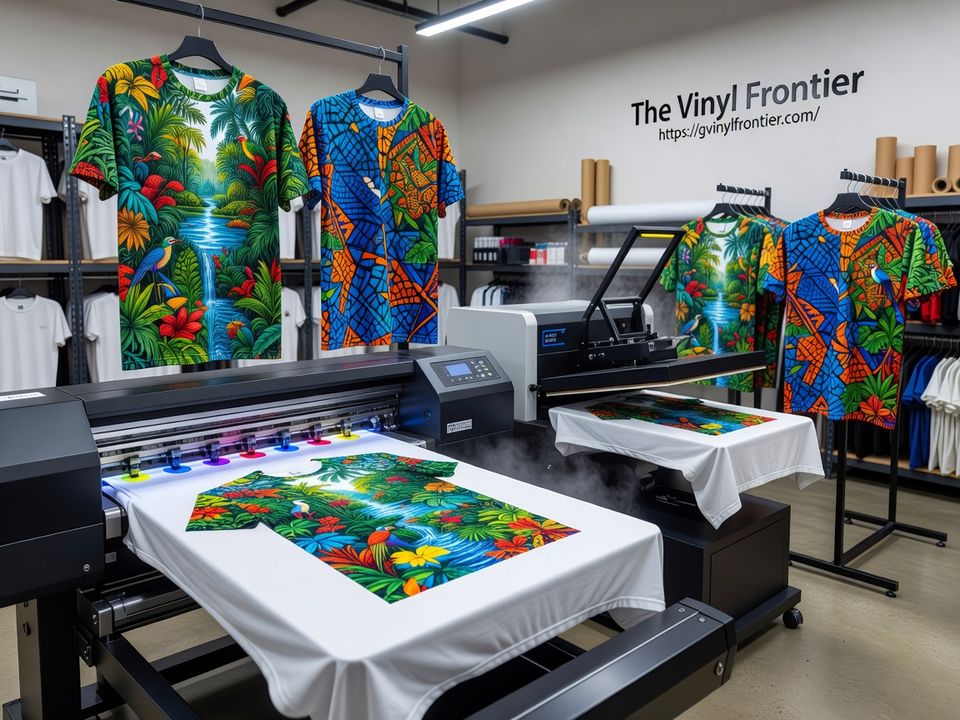
A full print t shirt (often called an all-over print shirt) relies on edge-to-edge printing techniques to stretch high-resolution artwork across every square inch of the garment. When you look at a standard graphic tee, the image is confined to a rectangular box on the chest. With all-over printing, the canvas is the entire shirt.
To get an edge-to-edge finish without white gaps or ink creasing around the armpits and collar, premium apparel manufacturers use a cut-and-sew workflow.
Digital File Preparation: The digital design is arranged across specialized pattern templates for the front, back, and sleeves.
Sublimation Printing: Ink is printed onto large transfer paper using specialized dye-sublimation inks.
Heat Transfer: High heat and extreme pressure force the ink to convert into a gas, bonding deep within the fibers of un-cut rolls or panels of synthetic fabric.
Precision Cutting: The printed fabric is cut out along precise pattern lines.
Hand Assembly: Craftspeople sew the individual panels together, creating a seamless graphic transition across the shoulder seams, side panels, and hem lines.
This cut-and-sew method ensures high color vibrancy while completely eliminating the unprinted white creases often seen in cheaper direct-to-garment prints on pre-assembled shirts.
Comparing All-Over Printing vs Standard DTG and Screen Printing
Choosing between an all-over print, Direct-to-Garment (DTG), and traditional screen printing comes down to your design complexity, desired texture, and coverage goals.Screen printing transfers liquid ink through mesh stencils directly onto pre-made garments. It remains the gold standard for bulk orders with simple, localized artwork, such as single-color chest logos. However, applying screen print across an entire assembled shirt creates thick, heavy ink layers that feel rubbery and stiff over large areas.
Direct-to-Garment (DTG) works much like an inkjet printer, applying water-based inks directly to 100% cotton garments. While DTG handles detailed photos exceptionally well for chest prints, it cannot effectively print over raised seams, neck collars, or sleeves without severe ink pooling and white gap creasing.
For more technical background on garment methods, check out our guide on everything you need to know about shirt printing.
Dye Sublimation vs DTF for Full Print T Shirt Production
When executing an all-over print, manufacturers primarily rely on dye sublimation, though Direct-to-Film (DTF) is sometimes used for specific hybrid applications.Dye sublimation works exclusively on synthetic materials like polyester or poly-spandex blends. Under high temperatures (around 380°F to 400°F), the solid ink transforms directly into a gas without turning liquid first. The pores of the synthetic fibers open up, allowing the gas to permeate deep into the material. Once cooled, the pores close, trapping the pigment inside the thread. This makes the print feel like part of the fabric itself—completely weightless, breathable, and permanently resistant to cracking or peeling.
Direct-to-Film (DTF)—sometimes branded as DTFlex—prints digital designs onto a PET film, which is then coated with an adhesive powder and heat-pressed onto the shirt. While DTF works on cotton and dark fabrics, placing large DTF film panels across an entire shirt back can create a thick, heavy patch that traps sweat and restricts natural body movement.
FeatureDye SublimationDirect-to-Film (DTF)Primary Fabric100% Polyester or Poly BlendsCotton, Polyester, Blends
Print Hand-FeelCompletely weightless / Zero handSlightly elevated adhesive print layer
Breathability100% Breathable (Ink bonds in fiber)Reduced breathability on large prints
DurabilityPermanent (Will never crack or peel)High (Vibrant, but subject to long-term wash wear)
Ideal ArtworkEdge-to-edge patterns, full graphic rendersHigh-contrast spot prints or chest patches
Best Fabrics and Artwork Preparation for All-Over Prints
The structural quality and visual clarity of a full print t shirt depend heavily on selecting the correct base fabric and preparing print-ready digital files.Ideal Garment Fabrics for Sublimation Printing
Because dye-sublimation ink requires synthetic polymers to absorb pigment, 100% polyester and poly-spandex blends are the gold standard for custom edge-to-edge apparel.- Performance Knit Interlock (100% Polyester, ~4.0 oz): Lightweight, moisture-wicking, and breathable. It is ideal for high-performance athletic wear, rash guards, and summer promotional tees.
- 100% Spun Polyester (180 GSM): Engineered to mimic the ultra-soft hand feel of natural combed cotton while retaining the sub-surface print durability of synthetic fibers. A 180 GSM (grams per square meter) weight provides a retail-grade balance of structure and drape.
- Super Soft / Cotton-Feel Recycled Blends (96% Recycled Poly / 4% Spandex, 5.0 to 6.2 oz): Eco-friendly textiles crafted from recycled plastic water bottles. The addition of spandex adds four-way stretch, perfect for streetwear brands and athletic wear.
Printing digitally on natural, un-coated organic cotton garments often results in muted colors, absorbing around 40% less color intensity than non-organic synthetics. Furthermore, digital printing on dark natural fabrics runs a risk of crocking—a condition where ink slowly rub-fades or flakes along natural fabric creases after repeated machine washing. Selecting synthetic poly blends eliminates crocking altogether.
Preparing Digital Files for a Full Print T Shirt Design
Creating full-bleed graphics requires strict technical file preparation to prevent pixelation and graphic distortion. If you are using our custom online design software to build your shirt, keeping these core file metrics in mind ensures a smooth upload process. Check out our intuitive custom t-shirt maker to create your own personalized shirts in minutes.Set File Resolution to 300 DPI: Always scale digital artwork to 100% of the target physical garment canvas at 300 DPI (dots per inch). While 200 DPI is the bare minimum for digital apparel production, 300 DPI guarantees razor-sharp details on complex graphics.
Use sRGB Color Space: Ensure your digital editing software (Adobe Photoshop or Illustrator) is set to the sRGB color profile (sRGB IEC61966-2.1). Sublimation digital rip printers translate sRGB profiles far more accurately than print-standard CMYK working spaces.
Incorporate Bleed Margins: Extend your background pattern past the outer hem edge lines by at least 0.5 to 1 inch. This prevents blank white borders from appearing along hemmed edges or arm seams during precision cutting and sewing.
Choose the Right File Format: Export complex, multi-layered artwork with transparent backgrounds as flattened TIFF or high-resolution PNG files. For simple vector repeating graphics or basic photo renders, standard high-quality JPEG files are acceptable.
Sizing, Care, and Cost Factors for All Over Print Shirts
Ordering custom all-over printed apparel involves managing sizing variations, calculating pricing structures, and following proper garment washing steps.Sizing Accuracy and Preventing Garment Shrinkage
Synthetic sublimation garments exhibit predictable heat shrinkage during the manufacturing process. When exposed to 400°F heat transfer presses, raw poly fabrics contract between 2% and 8% (averaging roughly 2.5%). Cut-and-sew manufacturers compensate for this by cutting patterns slightly larger prior to heat printing.When ordering a full print t shirt, note the specific fit category:
- Unisex Fit: Offers a classic straight-cut silhouette that fits comfortably across wide shoulder spans and chest widths.
- Oversized / Streetwear Fit: Features dropped shoulders, wider sleeves, and a longer hem length. That heavy poly-spandex blends can stretch, which may alter how the garment hangs compared to stiff 100% heavyweight cotton tees.
- Tagless Comfort: High-end full print tees replace scratchy sewn woven tags with printed tagless inside labels using soft satin material or direct-sublimated sizing info.
Pricing Structure, Shipping, and Minimum Order Requirements
The baseline pricing for custom all-over print shirts depends heavily on garment weight, custom fabric selections, order volumes, and fulfillment speeds.- Single-Unit Base Pricing: Individual custom sublimation t-shirts generally range from $19.75 to $34.75 CAD / $24.95 USD for standard lightweight polyester blanks, climbing up to $59.00 USD for premium handcrafted hand-sewn cut-and-sew options.
- No Minimum Order Quantities (MOQ): Modern print-on-demand networks allow custom creators to fulfill a single unit without setup charges.
- Sample Order Programs: Ordering a single prototype unit allows creators to inspect print sharpness, seam alignment, and fabric hand-feel before launching a broader collection.
- Volume Bulk Discounts: Ordering in volume scales down your unit cost significantly. Most print facilities unlock tiered volume discounts (up to 20% off) once orders surpass 25 units of the same item.
- Production Turnaround & Logistics: Orders typically clear internal printing, sewing, and quality checks within 48 hours to 2 business days. Standard ground shipping generally arrives within 4 to 8 business days domestically.
Proper Garment Maintenance to Prevent Fading
Even though dye-sublimated graphics are permanently fused within synthetic polyester fibers, proper washing care protects the structural elasticity and stitch integrity of the shirt. For long-sleeve apparel care tips, review our guide on long sleeve graphic t-shirts style guide and top picks.- Machine Wash Cold Inside-Out: Always flip the shirt inside-out before tossing it into the wash. Wash on a gentle cycle using cold water (86°F / 30°C or below) paired with non-abrasive, mild laundry detergents.
- Avoid Bleach & Fabric Softeners: Harsh chlorine bleaches degrade synthetic polyester elastic polymers over time, causing color fading and fabric breakdown.
- Line Dry or Tumble Dry Low: Hang-drying out of direct sunlight is optimal for preserving seam stitches. If using a dryer, select a low-heat setting. High dryer heat can alter synthetic stretch fibers like spandex.
- Cool Iron Inside-Out Only: Never place a scorching hot iron directly onto printed graphics. If ironing out fabric wrinkles is required, use a low temperature setting and place a protective cotton cloth buffer between the iron and the shirt.