
How to Save Your Car Paint from Birds and Bad Weather
Why Your Car's Paint Is Under Attack Every Single Day
Car exterior paint protection is one of the most important — and most overlooked — things you can do to preserve your vehicle's value and appearance.
Quick Answer: Best Types of Car Exterior Paint Protection
Protection TypeDurabilityBest ForDIY Friendly?Carnauba WaxUp to 6 monthsBudget-conscious ownersYes
Polymer SealantUp to 6 monthsDaily driversYes
Ceramic Coating2–5 years (up to 9 with pro application)Long-term protectionModerate
Paint Protection Film (PPF)10–12 yearsMaximum physical protectionNo
Every time your car sits outside, it faces a quiet but relentless assault. Bird droppings carry uric acid that eats through clear coat in hours. UV rays fade and oxidize paint over months. Acid rain, road salt, and tree sap all leave their mark. And here's something most people don't realize — a brand-new car from the dealership is typically already 4 to 5 months old, meaning its paint has already been exposed to the elements before you even drive it home.
A factory paint job can last up to 20 years with proper care. Without protection, that timeline shrinks fast.
At The Vinyl Frontier, we specialize in high-quality vehicle wraps and protective graphics that double as serious car exterior paint protection — keeping your vehicle looking sharp while also shielding it from daily damage. In the guide below, we'll walk you through everything you need to know to make the right choice for your car.
The Ultimate Guide to Car Exterior Paint Protection
When you look at your car, you aren't actually looking at the colored paint. You are looking through a thin, transparent layer called the clear coat. The clear coat is your vehicle's primary line of defense. However, it is highly susceptible to microscopic scratches, oxidation, and chemical etching.Implementing a dedicated strategy for car exterior paint protection acts as a sacrificial barrier. Instead of environmental hazards attacking your clear coat directly, they must first eat through this protective shield.
Why Your Vehicle Needs Car Exterior Paint Protection
Whether you just drove a brand-new truck off the lot in Hanceville, AL, or you are trying to extend the life of a trusted daily driver in Dodge City, AL, paint protection is a necessity.For new cars, applying protection immediately is crucial. Because dealerships often store vehicles outside for months before they are sold, the clear coat may already have microscopic contaminants embedded in it. Protecting the paint early seals in that flawless factory finish and prevents early-stage oxidation.
For used cars, paint protection works wonders in restoring lost depth and gloss while preventing existing wear from worsening. Furthermore, a vehicle’s exterior condition is one of the single biggest factors in determining its resale value. A car with faded, peeling clear coat can lose thousands of dollars in value overnight.
To dive deeper into how protective measures shield your investment, check out our guide, Beyond the Wash Ultimate Guide to Automotive Paint Protection.
Environmental Threats: Birds, Acid Rain, and Bad Weather
Living in Alabama means dealing with intense summer heat, unpredictable storms, and plenty of local wildlife. The threats your paint faces daily are highly destructive:- Bird Droppings: Birds are the ultimate enemies of automotive paint. Their droppings contain high concentrations of uric acid. As your car heats up in the sun, the metal expands. When it cools, the paint contracts around the acidic dropping, resulting in permanent chemical etching and dull spots.
- Acid Rain and Water Spots: When rainwater mixes with atmospheric pollutants and evaporates off your hot hood, it leaves behind mineral deposits. These hard water spots can eat into the clear coat, requiring professional polishing to remove.
- UV Damage: The Alabama sun acts like a slow-burning furnace for your car's exterior. Without protection, UV radiation breaks down the chemical bonds of the paint, leading to oxidation, fading, and eventual clear coat failure.
To learn more about keeping your car safe from the sun's harsh rays, read our article Car Colour Protection Because Your Vehicle Deserves a Better Sunscreen Than You.
Comparing the Main Types of Paint Protection
To choose the right car exterior paint protection for your lifestyle and budget, you need to understand how the main options stack up against one another.Traditional Wax and Polymer Sealants
Traditional carnauba wax is the classic choice for car enthusiasts. Derived from the leaves of a Brazilian palm tree, carnauba wax sits on top of the paint, filling in tiny imperfections to create a warm, deep gloss. However, natural wax has low heat resistance and typically only lasts 1 to 3 months before it melts away.Synthetic polymer sealants are engineered alternatives. They are made from man-made chemical compounds that cross-link to form a tighter bond with the paint. Sealants offer better durability than natural waxes, often lasting up to 6 months, and they handle high temperatures much better.
Many modern hybrid waxes combine the deep shine of carnauba with the durability of synthetic polymers for an excellent balance. For a complete breakdown of these traditional methods, explore our resource Guard Your Gloss The Ultimate Guide to Car Color Protection.
Ceramic Coatings: Long-Lasting Chemical Bonds
Ceramic coatings represent a massive leap forward in paint care. Typically formulated with Silicon Dioxide (SiO2), these liquid polymers do not just sit on top of your paint — they chemically bond with your clear coat at a molecular level.This molecular bond creates a semi-permanent, glass-like layer that is incredibly hydrophobic. Water, mud, and grime bead up and roll off with ease, making your vehicle much easier to clean. Ceramic coatings offer outstanding chemical resistance against bird droppings and acid rain, and they typically last between 2 to 5 years.
While some DIY ceramic sprays are available for home application, high-end professional coatings offer unmatched durability. For example, professional formulas can protect a vehicle for up to 9 years with proper care.
Paint Protection Film (PPF): The Ultimate Physical Shield
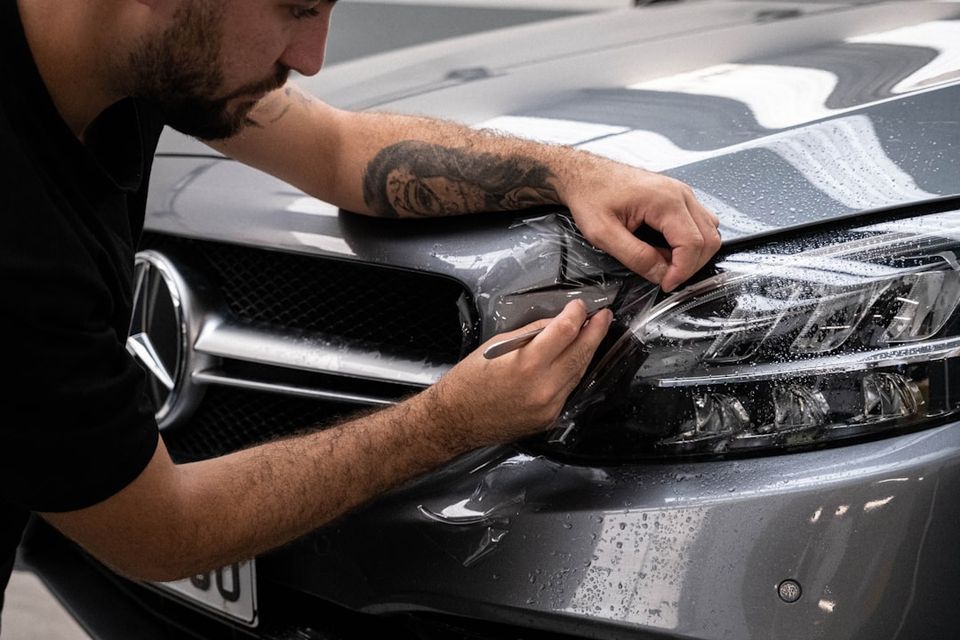
If ceramic coatings are like a liquid shield, Paint Protection Film (PPF) — also known as a clear bra — is armor plating. PPF is a thick, transparent polyurethane film applied directly to the high-impact areas of your vehicle (such as the front bumper, hood, fenders, and side mirrors).Unlike waxes or coatings, PPF provides physical impact resistance. It is thick enough to absorb the impact of flying rocks, gravel, and road debris, preventing rock chips and deep scratches. Premium films, such as the Scotchgard™ Paint Protection Film Pro Series | 3M United States, feature self-healing technology. When exposed to heat from the sun or warm water, the elastomeric polymers in the film naturally return to their original shape, causing swirl marks and light scratches to disappear.
Many high-end films come with long-term manufacturer warranties. The Scotchgard™ Paint Protection Film Pro Series, SGH6PRO, 96024, 8 mil, Transparent, No Cap Sheet, 24 in x 100 ft | 3M United States and the Scotchgard™ Paint Protection Film Pro Series 200 Gloss, 20024, with Cap Sheet, 24 in x 100 ft (0.61 m x 30.5 m) | 3M United States are backed by a solid 10-year warranty against yellowing, bubbling, or cracking. For absolute premium defense, the GLOSS EXTREME SERIES - PPF – Deltex Films features an advanced ceramic-infused hydrophobic top coat and is backed by an incredible 12-year manufacturer warranty.
To learn more about how PPF works and why it is the gold standard of defense, check out The Ultimate Guide to Paint Protection Film.
Choosing the Best Car Exterior Paint Protection for Your Lifestyle
The right protection type depends heavily on how you use your car:- Daily Drivers: If your car is exposed to highway debris, gravel roads, and daily commuting in Hanceville, a combination of PPF on the front bumper (to stop rock chips) and a ceramic coating on the rest of the body is the ideal setup.
- Show Cars and Weekend Cruisers: For vehicles that spend most of their time in a garage, a premium carnauba wax or a high-gloss ceramic coating will deliver that eye-catching, deep wet-look shine.
- Coastal or Harsh Environments: Vehicles subjected to salt air, heavy humidity, or road salt need the chemical resistance of ceramic coatings or heavy-duty vinyl wraps to prevent rust and corrosion.
For a detailed look at protecting your vehicle's high-impact zones, read The Ultimate Clear Bra Installation Guide Protect Your Assets.
How to Prepare and Apply Paint Protection at Home
If you are a DIY enthusiast who loves working on your vehicle in your own garage, you can achieve excellent results at home. However, the secret to any successful paint protection application is not the product itself — it is the preparation.Step-by-Step Vehicle Preparation: Wash, Clay Bar, and Polish
Applying a wax, sealant, or ceramic coating over dirty paint will trap contaminants underneath, ruining the bond and the finish. Follow these preparation steps:The Two-Bucket Wash: Wash your vehicle thoroughly using the two-bucket method (one bucket for soapy water, one for rinsing your wash mitt) to prevent rubbing dirt back onto the paint. Use a wax-free, pH-neutral strip shampoo to remove old waxes and oils.
Clay Bar Decontamination: Even after washing, your paint will still feel rough. Run a clay bar across the lubricated surface of the paint. The clay will pull out embedded contaminants like iron filings, industrial fallout, and tree sap, leaving the surface smooth as glass.
Paint Correction (Polishing): Use a dual-action polisher with a light polishing compound to remove light scratches, swirl marks, and oxidation. This step is critical for ceramic coatings, as they will lock in whatever the paint looks like underneath.
Isopropyl Alcohol (IPA) Wipe Down: Wipe the entire vehicle down with a diluted isopropyl alcohol solution. This removes any leftover polishing oils, leaving a perfectly bare clear coat for the protection to bond to.
The Best DIY Paint Protection Options for Enthusiasts
For car owners looking for professional-grade gloss without the complexity of a professional ceramic application, hybrid ceramic sprays and wet waxes are the perfect solution.These products are incredibly easy to apply — often requiring a simple spray-on, wipe-off process with clean, high-quality microfiber towels. They provide excellent hydrophobic water-beading and up to 6 months of protection.
Maintenance Tips to Keep Your Gloss Guarded
Once your protection is applied, you must maintain it properly to make it last:- Avoid Automatic Brush Car Washes: The stiff nylon brushes in automatic washes act like sandpaper, scratching your finish and lifting the edges of wraps or PPF. Always hand wash or use a touchless car wash.
- Use pH-Neutral Shampoos: Harsh detergents can strip waxes and degrade sealants. Use a dedicated car wash soap that is gentle on protective layers.
- Apply Booster Sprays: For ceramic coatings, using a ceramic maintenance spray or booster every few months will rejuvenate the hydrophobic properties and extend the life of the coating.