Reach New Heights with Custom Pylon Signs
What Are Pylon Signs? A Quick Answer Before We Dive In
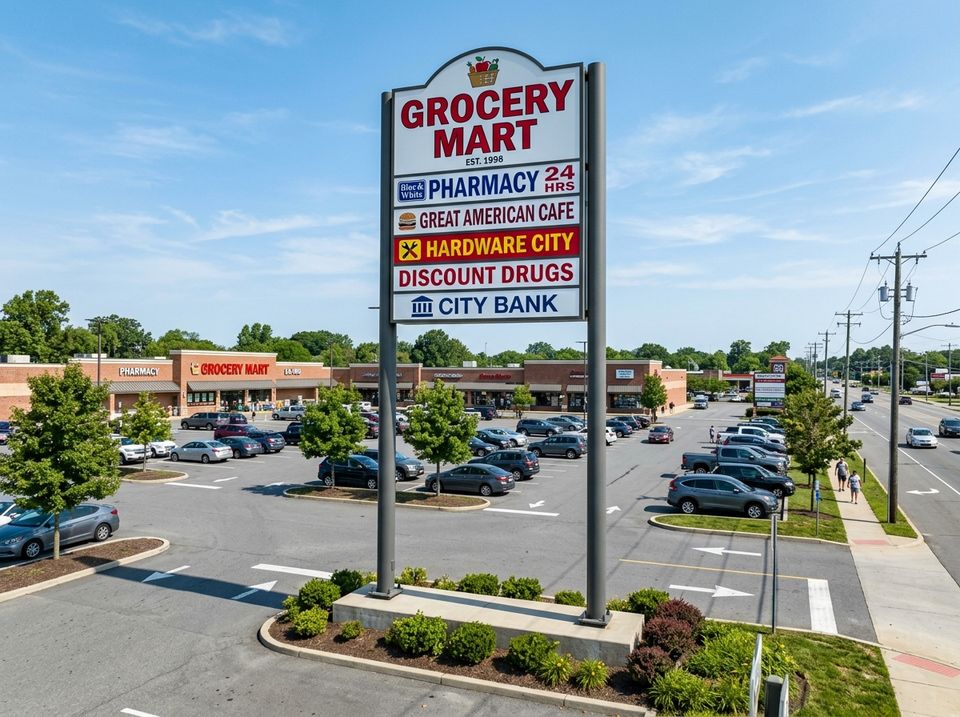
Pylon signs are tall, freestanding signs supported by one or more poles, designed to make your business visible from a long distance.
Here's what you need to know at a glance:
- Height: Pylon signs exceed 8 feet tall — most range from 20 to 100 feet
- Structure: Supported by one or two exposed poles anchored into the ground
- Sides: Can be single-sided or double-sided
- Lighting: Often illuminated with LED or fluorescent lighting for 24/7 visibility
- Best for: Highways, shopping centers, car dealerships, industrial parks, and multi-tenant commercial areas
- Cost: Typically ranges from $10,000 to $200,000 depending on size, materials, and features
If your building sits back from the road, sits behind a parking lot, or competes with other businesses for attention — a pylon sign is built exactly for that problem.
They work because height equals visibility. A sign towering 30, 50, or even 100 feet in the air catches the eye of a driver long before they reach your driveway. That extra seconds of notice can be the difference between a customer turning in — or driving past.
At The Vinyl Frontier, we've helped businesses across the region cut through the noise with custom, high-quality signage solutions, including pylon signs built to make your brand impossible to miss. Whether you're starting from scratch or upgrading an outdated sign, we bring the craftsmanship and materials to get it done right.
Understanding the Impact of Pylon Signs
In business, being seen is half the battle. If a customer can’t find you, they can’t buy from you. That is where the pylon sign comes in. These aren't just your run-of-the-mill storefront signs; they are towering landmarks. By definition, a pylon sign is a freestanding structure that exceeds eight feet in height. While eight feet is the technical minimum, most of the signs we see in commercial areas start around 20 feet and can soar up to 100 feet when they are placed near major highways.These structures are typically upheld by one or more heavy-duty steel poles or supporting structures. Because they stand so high, they act as a beacon, cutting through the "visual clutter" of trees, other buildings, and smaller signs. For businesses located in Hanceville or Dodge City, AL, where traffic moves quickly along main roads, having that extra height is essential.
Think of a pylon sign as your 24/7 silent salesperson. It doesn't take breaks, it doesn't mind the rain, and it constantly broadcasts your brand to everyone within a half-mile radius. Whether you are a single-tenant business or part of a massive shopping plaza, these signs provide the professional "anchor" your location needs.
If you want to see how these structures look in the real world, you can explore More info about our custom sign gallery to see the variety of heights and styles available.
Common Names and Terminology
One of the confusing things about the sign industry is that we tend to use a lot of different names for the same thing. Depending on who you talk to, a pylon sign might be called:- Pole Signs: This is the most common alternative. It refers to the fact that the sign cabinet is mounted on a visible pole.
- Highway Signs: Because these are often found near interstates to catch high-speed traffic.
- Freestanding Signs: A broad term for any sign not attached to a building.
- Road Signs: Often used by locals to describe signs that sit right at the edge of the property.
- Raised Monuments: Occasionally, people use this to describe pylon signs that have a decorative base covering the poles.
No matter what you call them, the goal remains the same: long-distance visibility that guides customers straight to your door.
Pylon Signs vs. Monument Signs: Key Differences
We often get asked, "Should I get a pylon sign or a monument sign?" The choice usually comes down to two things: your location and your goals.The main difference is height. Pylon signs are designed for distance. They are tall, towering structures meant to be seen from hundreds of yards away.
Monument signs, on the other hand, are built at eye level. They are typically five feet tall or shorter, though some prominent ones can reach 8 to 12 feet.
While pylon signs are like billboards for your property, monument signs are more like a "handshake." They provide a high-end, grounded look that is perfect for entrances where traffic is slower. For a deeper look at the shorter side of signage, check out First Impressions Count: The Best Community Entrance Monuments.
FeaturePylon SignMonument SignAverage Height20' - 100'Ground level to 5' (max 12')
Primary GoalLong-distance visibilityBrand reinforcement at entrance
Traffic SpeedHigh-speed (Highways/Main roads)Low-speed (Driveways/Pedestrians)
StructureOne or two tall polesSolid base (masonry, stone, brick)
ZoningOften restricted in residential areasGenerally allowed in most areas
Ideal Locations for Pylon Signs
Not every location is a good fit for a pylon sign. In fact, in some mixed zoning areas, a towering sign might be seen as an eyesore or might even be prohibited by local ordinances. However, in the right spot, they are unbeatable.1. Highways and Interstates: If your business is near a major highway, you need a sign that can be seen by a driver going 70 mph. A pylon sign gives them enough time to see your logo, process the information, and safely exit.
2. Shopping Centers and Malls: These are often "multi-tenant" pylons. They feature a large "header" for the name of the plaza and several smaller "lightboxes" for individual stores.
3. Industrial Parks: When warehouses look identical, a tall pylon sign helps truckers and visitors find the right facility from a distance.
4. Car Dealerships: Dealerships rely on massive pylon signs to showcase brand logos and current promotions to passing traffic.
5. Obstructed Properties: If your building is hidden behind a large parking lot or a row of trees, a pylon sign is the only way to let the world know you’re there.
Customization, Materials, and Mounting Styles
At The Vinyl Frontier, we believe a sign should be as unique as the business it represents. You aren't stuck with a boring white box on a stick. Modern pylon signs offer incredible design flexibility.The "skeleton" of a pylon sign is usually made of structural steel or heavy-duty aluminum extrusions. Aluminum is a favorite because it is naturally rust-proof and holds up well against the Alabama humidity. For the sign faces, we typically use:
- Acrylic: Great for smaller signs, offering vibrant colors and good light transmission.
- Polycarbonate (Lexan): Much tougher than acrylic and virtually unbreakable, making it ideal for areas with high winds or potential vandalism.
- Flex Face: This is a heavy-duty translucent vinyl that is stretched tight like a drum over the sign frame. It’s used for very large signs where a rigid plastic face would be too heavy or prone to blowing out in a storm.
If you are looking for inspiration on how to make your brand pop, check out these Unlock Your Creativity: Easy Business Sign Design Ideas.
Popular Mounting Styles for Pylon Signs
How your sign is mounted changes the "vibe" of your business. Here are the three most common styles:- Single-Pole Mount: The classic "lollipop" style. It’s cost-effective and can reach heights of 80 to 100 feet. It’s perfect for maximum height on a budget.
- Twin-Pole Mount: Using two poles provides more stability for larger sign cabinets. It also looks a bit more symmetrical and "sturdy."
- Covered-Pole (Architectural): This is where the magic happens. Instead of leaving the steel poles exposed, we cover them with materials like brick, stone, or aluminum cladding that matches your building's architecture.
Illumination and Technology Options
Over 30% of a business street’s traffic happens at night. If your sign isn't lit, you are essentially invisible for a third of the day. Pylon signs are almost always illuminated to ensure they work 24/7.In the past, fluorescent lamps were the standard. However, technology has shifted. We highly recommend LED (Light Emitting Diode) illumination for several reasons:
- Longevity: LEDs last about 10 times longer than fluorescent lights.
- Efficiency: The electrical consumption of LEDs is about 1/7th of what fluorescent lights would be.
- Maintenance: Fluorescent lamps need replacement roughly every 2,000 hours of use. LEDs can go for years without a service call.
- Cost: To put it in perspective, one thousand LED lights left on 8 hours per day for 365 days will use only about $4.01 in electricity!
Digital LED Message Centers
If you want the ultimate in modern signage, you can integrate a digital LED message center into your pylon structure. These allow you to change your message, announce sales, or show the temperature and time with the click of a button.Digital displays have a massive ROI (Return on Investment) because they offer the lowest "cost per impression" of almost any advertising medium. Instead of paying for a billboard every month, you own the billboard. For more on how digital tech can transform your storefront, read about Storefront Digital Signage: Elevate Your Retail Presence.
Investment Factors and Legal Considerations
Let's talk numbers. A pylon sign is a significant investment. The average cost can range from $10,000 to $200,000. Why the huge range? It depends on several factors:Size and Height: A 20-foot sign is much cheaper than a 100-foot sign that requires massive steel reinforcements and deep concrete footings.
Materials: Using high-end stone masonry on the base will cost more than exposed steel.
Technology: Adding a full-color LED message center can double the price of a standard lightbox pylon.
Foundation: Depending on the soil in Hanceville or Dodge City, we may need to excavate deep footings with rebar and J-bolts to ensure the sign can withstand high winds.
Beyond the cost, you have to consider the law. Every city has by-laws regarding how tall a sign can be and where it can be placed. You can’t just put a 100-foot sign in the middle of a residential neighborhood! Part of our service at The Vinyl Frontier is helping you navigate these permits and zoning requirements to ensure your sign is 100% legal.
Professional Installation and Maintenance Services
Getting a pylon sign isn't a DIY project. It involves heavy machinery, electrical expertise, and structural engineering. The process usually looks like this:- Design: We work with you to create a sign that fits your brand.
- Permitting: we handle the paperwork with local Alabama authorities.
- Fabrication: Our team builds the sign using high-quality aluminum and steel.
- Installation: This involves excavating the ground, pouring concrete footings, and using a crane to lift the massive sign cabinet into place.
- Electrical: Wiring the sign into your power grid so it shines bright every night.
To learn more about our full range of capabilities, visit Our Services or check out our Blog for more tips on choosing the right signage.
Routine Maintenance and Repair
Even the best signs need a little love eventually. Weather, sun exposure, and time can take a toll. We offer:- LED Retrofitting: If you have an old fluorescent sign, we can swap the internals for modern LEDs to save you money on power and repairs.
- Face Replacement: If your brand changes or the plastic face becomes faded, we can manufacture and install new faces.
- Structural Inspections: Ensuring the bolts and steel remain rust-free and secure.
- Cleaning: Keeping the faces clean so your brand looks its best.