Stop Stone Chips in Their Tracks with Hood Protection Film
Why Car Hood Protector Film Matters
Car hood protector film is a clear, durable layer applied over the hood's leading edge to help stop stone chips, road tar, sand, and bug residue from damaging the paint. It works as an almost invisible impact barrier, taking the wear that would otherwise hit your vehicle's clear coat.
Quick answerWhat it meansWhat it protectsThe front edge of the hood, where rocks, grit, and insects strike most often
What it looks likeClear and subtle, unlike a raised plastic bug deflector
Why it mattersSmall chips can expose paint to further wear and make a well-kept vehicle look older
Common coveragePartial hood coverage can extend roughly 8 to 12 inches back from the front edge
Your hood faces debris every time you drive, whether you are on a highway, a gravel road, or a busy city street. Bugs can also leave acidic residue that may etch unprotected paint when left too long.
For business owners, a clean vehicle is more than personal pride. It is part of the professional image customers see when you arrive on-site, park outside a job, or use a branded vehicle wrap to promote your work.
At The Vinyl Frontier, we create durable vehicle graphics, wraps, signs, and protective solutions designed to help local businesses look professional on the road. Our experience with car hood protector film and vehicle finishes helps us understand how to protect the surfaces that support your brand image.
What Is Car Hood Protector Film and How Does It Work?
Car hood protector film, often referred to in the auto industry as a clear bra or paint protection film (PPF), is an advanced protective layer engineered to safeguard paint from severe road hazards. Manufactured primarily from high-grade thermoplastic polyurethane (TPU), this specialized material combines flexibility with extreme tensile strength.Unlike thin cosmetic vinyl wraps, polyurethane acts as a shock-absorbing cushion. When a loose pebble or piece of gravel strikes your hood at high speeds, the elastomeric properties of the film disperse the kinetic energy across its surface instead of letting that impact transfer directly to your fragile factory paint clear coat.
Beyond physical impact absorption, high-quality protective film serves as a robust shield against environmental chemical contaminants. Organic compounds like bug splatters contain harsh natural acids that, if left sitting under a hot midday sun, will etch deeply into standard clear coats and cause permanent discoloration.
Standard polyurethane films establish an impermeable barrier that resists bug acid, road tar, tree sap, and winter road salt. To learn more about how protective films safeguard various exterior surfaces, check out The Ultimate Guide to Paint Protection Film.
How Polyurethane Shields Your Vehicle Paint
The protective capability of modern film stems directly from its specialized physical construction. Standard professional-grade films typically range in thickness from 7.5mil to 8mil (roughly 190 to 203 microns). This thickness provides the optimal balance between heavy-duty physical protection and transparent conformability around complex body contours.Additionally, modern polyurethane formulations incorporate 100% UV stability within their topcoat layers. Sun exposure can bake unprotected painted surfaces or turn low-quality plastic covers yellow over time.
Premium protective film filters harmful ultraviolet rays, preventing uneven paint fading while ensuring the film itself remains optically transparent over years of daily driving. Whether you are commuting past construction zones or cruising gravel roads around Hanceville and Dodge City, AL, an 8mil layer of polyurethane acts as a constant defense against sand-blasting and stone impacts.
Choosing the Right Car Hood Protector Film Finish
Protecting your vehicle does not mean sacrificing its appearance. Today's protective films are available in distinct finishes designed to match or enhance your vehicle's factory look:- Gloss Finish: Engineered with low orange peel technology, high-gloss films offer absolute optical clarity. Once applied to a standard factory paint job, the film is virtually invisible, preserving the rich color and high shine of the underlying finish.
- Matte/Satin Finish: Designed for vehicles with factory matte or satin paint, or for drivers wanting to convert a standard glossy hood into a custom satin accent. Matte films feature hydrophobic properties while providing identical impact protection.
By selecting the proper finish, you ensure your front-end protection seamlessly integrates with your vehicle's overall design aesthetic without dulling its original luster.
Benefits of Hood Protection Film vs Traditional Bug Deflectors
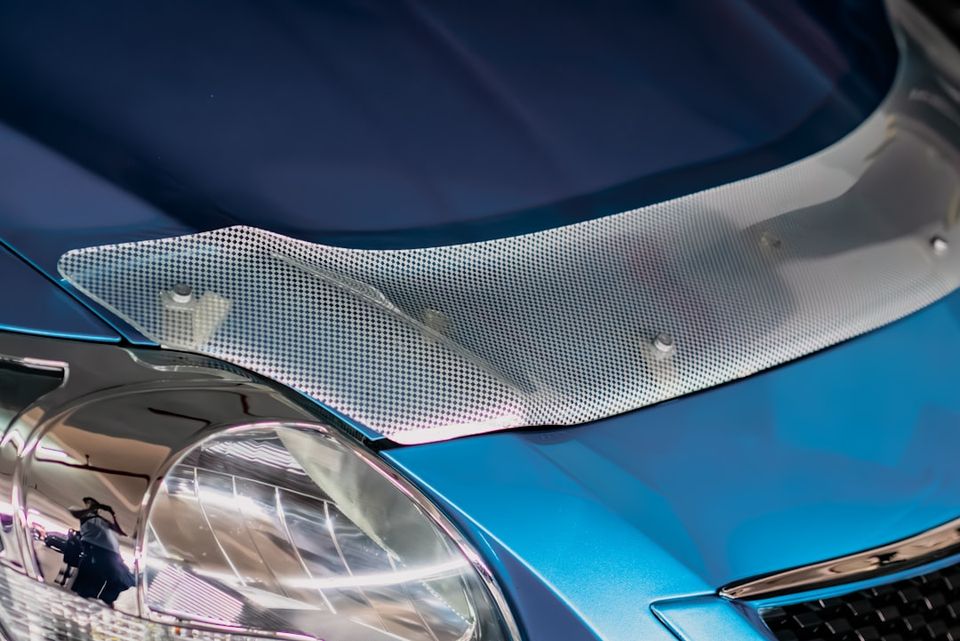
For decades, the go-to solution for front-end hood protection was a bulky, rigid acrylic plastic bug deflector bolted or taped above the grille. While functional, physical bug guards significantly alter the body lines of modern trucks and cars. Modern car hood protector film offers a sleek, invisible alternative that provides superior physical coverage without compromising your vehicle’s factory styling or aerodynamic performance.Feature / BenefitCar Hood Protector FilmTraditional Plastic Bug DeflectorVisual AppearanceVirtually invisible; preserves factory linesBulky, raised plastic hood shield
Coverage AreaFull leading edge (8–12+ inches or full hood)Narrow strip limited to front edge
AerodynamicsZero added wind drag or noiseIncreases drag; can cause hood vibration
Debris TrappingEdge-wrapped, seamless sealTraps dirt, leaves, and water underneath
Paint ProtectionAbsorbs stone chips and seals out bug acidShields against stones but can scratch underlying paint
Resale ImpactPreserves original factory paint conditionCan leave mounting marks or rub marks over time
Invisible Shield vs Plastic Bug Guards
Choosing an invisible protective film over a traditional plastic bug guard provides major advantages in aerodynamic design and vehicle maintenance. Plastic deflectors stick up off the hood, altering airflow and creating unnecessary wind noise at highway speeds. Worse still, the small gap between a rigid plastic deflector and your hood acts as a trap for falling leaves, road grit, and washing suds.Over time, trapped dirt acts like sandpaper against your paint whenever the deflector vibrates.
In contrast, car hood protector film adheres directly to the paint surface. Custom installations wrap the material seamlessly around the hood's leading edges, eliminating exposed cut lines and dirt-trapping seams. You enjoy complete edge-to-edge defense against high-speed impacts without any drag or mechanical noise.
Self-Healing Technology, Lifespan, and Warranties
One of the most remarkable breakthroughs in modern automotive protection is self-healing film technology. Premium lines like Scotchgard Pro Series Specifications feature an advanced elastomeric topcoat. When minor swirl marks, wash scratches, or light scuffs occur on the film's surface, applying gentle heat—such as warm sunlight or hot water—causes the polyurethane molecules to settle back into their original smooth configuration, erasing scratches automatically.When properly maintained, a professional-grade hood protector film typically lasts between 8 to 10 years. Leading manufacturers back these products with comprehensive 10-year warranties that protect consumers against material defects, yellowing, bubbling, or cracking. This long-lasting durability guarantees that your vehicle retains its showroom shine and maximum trade-in value for years to come.
Installation and Maintenance of Hood Protection Film
Achieving a flawless, bubble-free installation that stands up to automatic car washes and high-speed highway driving requires proper preparation, the right tools, and careful technique.DIY vs Professional Car Hood Protector Film Installation
Vehicle owners considering protecting their hood generally choose between purchasing DIY precut film kits or opting for a custom professional installation:Precut Film Kits: Computer-aided design (CAD) programs generate exact template patterns matched to specific vehicle years, makes, and models, such as a 2026 Precut Paint Protection Kit Example). These kits typically offer 12-inch leading-edge coverage. Many suppliers offer installation insurance, allowing DIYers to repurchase damaged individual panels at a discount if they make a mistake.
Professional Custom Edge Wrapping: Professional installers fit film directly to the vehicle panel and hand-trim or stretch the material roughly 0.5 inches past the panel underside. Wrapping edges beneath the hood completely hides seams, prevents edges from lifting during pressure washes, and creates an invisible finish.
While precut kits lower upfront costs for handy DIYers, complex curved hoods often require controlled stretching (over 15% elasticity) to lay flat without folds or fingers. For detailed guidance on proper installation workflows, read The Ultimate Clear Bra Installation Guide Protect Your Assets.
Safe Removal and Long-Term Surface Maintenance
Caring for your protected hood is straightforward, but following key initial guidelines ensures proper adhesive curing:- 7-Day Cure Window: Avoid washing your vehicle or exposing it to high-pressure water streams for at least 7 days after film installation to permit full adhesive bonding.
- Routine Washing: Wash the vehicle regularly using non-abrasive, pH-neutral car soaps and soft microfiber wash mitts.
- Waxing & Polishing: Apply dye-free, non-abrasive automotive waxes to preserve hydrophobic topcoat performance. Avoid harsh rubbing compounds or abrasive polishes over the film.
- Safe Removal: If you ever need to remove the film after years of use, applying mild heat from a heat gun or hot water softens the adhesive, allowing the polyurethane to peel away cleanly without damaging factory paint clear coats. Learn more about preserving your vehicle finish in How to Save Your Car Paint from Birds and Bad Weather.
Beyond the Hood: Coverage Options, Costs, and Value
While the leading edge of the hood experiences the highest density of rock strikes and bug impacts, total front-end protection involves evaluating all vulnerable exterior vehicle surfaces.High-impact zones that benefit significantly from protective film include:
- Front Bumpers: Highly susceptible to road rash, sand-blasting, and direct bug strikes.
- Side-View Mirrors: Exposed side positions make mirror caps magnet targets for loose highway gravel.
- Fenders & Rocker Panels: Lower body panels take heavy gravel spray kicked up directly by front tires.
- Door Edges & Cups: Guards against accidental wall dings, ring scratches, and key scuffs.
To explore comprehensive coverage strategies across your entire vehicle, read Beyond the Wash Ultimate Guide to Automotive Paint Protection.
Cost Breakdown and Real-World ROI
Investing in protective film is one of the most cost-effective decisions a car owner can make when compared to the expense of paint repair:- Partial Hood Installation: Professional installation for a partial hood (covering the front 8 to 12 inches) generally ranges from $100 to $150 in labor plus materials.
- Precut DIY Kits: Quality precut partial front kits start around $249 for standalone materials.
- Full Front Coverage: Full hood, front bumper, fenders, and side mirrors installed professionally generally cost between $800 and $1,500 depending on vehicle complexity.
Comparing these figures against body shop respray costs—which often run $500 to $1,000 for a single hood repainting that may diminish vehicle resale value—shows that clear film protection pays for itself immediately by preserving factory OEM paint integrity.