
How Accident Prevention Signs Keep Your Workplace Safe and Compliant
Why Accident Prevention Signs Are Essential for Every Workplace
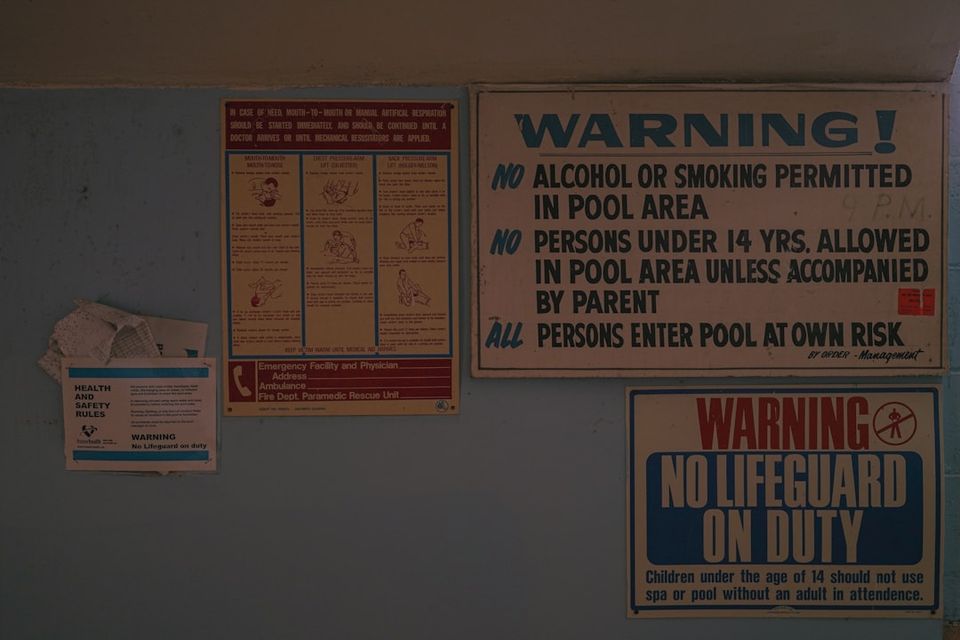
Accident prevention signs are standardized visual warnings used to communicate hazards, safety instructions, and required actions to workers and visitors in any facility.
Here is a quick overview of the main sign types and when to use each:
Sign TypeColor SchemeWhen to UseDangerRed, black, whiteImmediate hazard — risk of death or serious injury
WarningOrange, blackSerious hazard that could cause death or severe injury
CautionYellow, blackPotential hazard or unsafe practice — minor to moderate injury risk
Safety InstructionGreen, whiteGeneral safety guidance, first aid, or safe procedures
Biological HazardFluorescent orange/orange-redInfectious agents or biohazard materials
These signs are not optional. Under federal OSHA standards — including 29 CFR 1910.145 for general industry and 29 CFR 1926.200 for construction — employers are legally required to use correctly designed signs to communicate workplace hazards.
California businesses face additional requirements under the California Code of Regulations, Title 8, Section 3340.
Here is something many business owners do not realize: the physical shape of your safety signs is regulated too. Signs must have rounded or blunt corners and be completely free of sharp edges, burrs, or splinters. Even the placement of fastening bolts is governed by law, to make sure the sign itself does not become a hazard.
At The Vinyl Frontier, we design and produce custom accident prevention signs built to meet these strict regulatory standards — because a sign that looks good but fails compliance does not protect anyone.
Understanding the Classifications of Accident Prevention Signs
To maintain a safe and legally compliant workplace in Hanceville or Dodge City, AL, you must understand how safety signs are classified. OSHA and ANSI do not allow a one-size-fits-all approach. If you post a "Danger" sign where a "Caution" sign is appropriate, you risk diluting the urgency of your most critical warnings. This phenomenon is known as "sign fatigue," and it can lead directly to workplace injuries.Using a structured hierarchy for your hazard communication ensures that workers immediately understand the severity of a threat the moment they look at a sign. For a deeper dive into how these signs fit into your overall safety strategy, take a look at our Detailed Guide to Safety Signs.
Danger Signs for Immediate Hazards
Danger signs must be reserved strictly for the most severe threats. According to OSHA standards, they are only to be used where an immediate hazard exists that will result in death or serious injury if not avoided.The color specifications for Danger signs are highly rigid:
- Predominating Color: Red must make up the upper panel of the sign.
- Outline and Borders: A black outline must frame the borders.
- Lower Panel: The lower portion of the sign must be white, providing a high-contrast background for the specific safety wording.
For example, areas with exposed high-voltage wiring or active machinery that can easily crush limbs require Danger signs. To understand how to apply these warnings effectively around high-voltage equipment, read our guide on Sparking Awareness with Caution High Voltage Signs.
Caution Signs for Unsafe Practices
Caution signs are used to warn against potential hazards or to caution against unsafe work practices. Unlike Danger signs, which warn of life-threatening situations, Caution signs are deployed where the hazard could lead to minor or moderate injuries (such as slips, trips, or minor cuts).The design requirements for Caution signs include:
- Background Color: Yellow must be the predominating background color.
- Upper Panel: A black rectangular panel must sit at the top of the sign, featuring the word "Caution" in yellow letters.
- Lower Panel/Wording: Any additional instruction or warning text written on the yellow background must be printed in black letters.
Common real-world applications for Caution signs include marking wet floors, low-clearance doorways, or areas where protective eyewear is required but the immediate risk of severe injury is low.
Safety Instruction and Directional Signs
Not all accident prevention signs are meant to scare workers into compliance. Safety Instruction signs provide general helpful information, explain safety procedures, or point out the location of emergency equipment.The color standards for Safety Instruction signs are:
- Background: White background.
- Upper Panel: Green rectangular panel with white letters for the main signal header.
- Lower Panel/Wording: Black letters printed on the white background.
These signs are typically used to mark first aid kits, safety showers, eye wash stations, and general safety rules. Similarly, Directional signs — which feature black panels with white directional symbols on a white background — help workers navigate safely during an emergency. For details on marking critical safety devices like CO2 extinguishers, check out The ABCs of CO2 Fire Extinguisher Signs A Comprehensive Guide.
Design and Physical Specifications for Safety Signage
Creating a compliant safety sign involves much more than printing words on a board. Federal standards, including 29 CFR 1910.145 - Specifications for accident prevention signs and tags., dictate the exact physical attributes of safety signs to prevent them from becoming hazards themselves.Physical Safety of the Sign Itself
It would be highly ironic if an accident prevention sign actually caused an injury. To prevent this, regulations require that all signs have rounded or blunt corners. They must be completely free of:- Sharp edges
- Burrs
- Splinters
- Protruding fasteners
Furthermore, any bolts, screws, or adhesive fastening devices used to mount the signs must be positioned and finished in a way that does not pose a hazard to passing workers. At The Vinyl Frontier, we use precision manufacturing to ensure every sign we produce for local Alabama businesses is physically safe to handle and mount.
Lettering Size and Illumination Rules
A safety sign is useless if it cannot be read in time to avoid a hazard. OSHA and ANSI standards establish a direct relationship between the viewing distance and the minimum required letter height:- Viewing Distance of 200–250 feet: Requires a minimum letter height of 5 inches.
- Viewing Distance of 30–40 feet: Requires a minimum letter height of 1 inch.
- Viewing Distance of less than 10 feet: Requires a minimum letter height of 1/4 inch.
As a general rule of thumb, for letters greater than 5 inches, you should allow 35 to 40 feet of viewing distance per inch of letter height.
In addition to size, visibility is highly dependent on light. All accident prevention signs must be displayed with at least 2 foot-candles of illumination at the point of installation during all hours when employees are present. If your facility operates in low-light conditions or during night shifts, standard signs may not cut it. Learn more about the benefits of self-illuminating options in our article, Glowing Places Why Your Business Needs Reflective Safety Signs.
Accident Prevention Tags vs. Permanent Signs
While safety signs are designed to be permanent fixtures in your facility, accident prevention tags serve a very different purpose. Under OSHA regulations, safety tags are strictly temporary warning devices. They are used to identify out-of-the-ordinary or unexpected hazards, such as defective tools, malfunctioning machinery, or equipment undergoing maintenance.Tags must never be used as a permanent substitute for safety signs. Once a hazard is permanently resolved or a physical guard is put in place, the temporary tag must be removed. Leaving temporary tags up indefinitely contributes heavily to "sign fatigue," causing workers to ignore critical warnings.
Temporary Accident Prevention Signs in Construction
In the environment of a construction site, hazards change daily. Because of this, the rules under § 1926.200 - Accident prevention signs and tags., Subpart G - Signs, Signals, and Barricades, Part 1926 - Safety and Health Regulations for Construction, Chapter XVII - Occupational Safety and Health Administration, Department of Labor, Subtitle B - Regulations Relating to Labor, Title 29 - Labor, Code of Federal Regulations require strict discipline regarding temporary signage.Temporary construction signs must be:
Constantly Visible: Signs must remain completely visible and unobstructed while work is actively being performed.
Promptly Removed or Covered: The moment a hazard ceases to exist (for example, when an open trench is backfilled), the corresponding warning sign must be taken down or covered up immediately. This maintains the credibility of your active signs.
MUTCD Compliant: Any traffic control signs used on construction sites must conform to Part 6 of the Manual on Uniform Traffic Control Devices (MUTCD).
For further reference on construction site safety standards, you can review the federal guidelines at 29 CFR 1926.200 - Accident prevention signs and tags..
General Industry Tagging Requirements
For general industry environments in Hanceville and Dodge City, safety tags must meet strict readability and structural criteria.- Readability Distance: The signal word on any accident prevention tag (e.g., "Danger," "Caution," "Do Not Start") must be readable from a minimum distance of 5 feet (1.52 meters), or greater if the hazard warrants it.
- Secure Fastening: Tags must be affixed as close as safely possible to the hazard. They must be secured using a durable, positive fastening means — such as heavy-duty wire, nylon cable ties, strong string, or industrial adhesive — that can withstand the local work environment without falling off.
- Positive Phrasing: Whenever possible, the wording on both signs and tags should make positive suggestions rather than negative commands. For example, "Wear Eye Protection" is often more effective than "Do Not Enter Without Goggles."
Specialized Signage: Biohazards and Slow-Moving Vehicles
Certain hazards are so specific that they require highly standardized, globally recognized symbols. Two of the most common specialized markers you will encounter are biological hazard signs and slow-moving vehicle emblems. To explore other specialized property markers, read our guide Property Patrol What You Need to Know About No Trespassing Signs.Biological Hazard Accident Prevention Signs
Biological hazard signs are used to warn of the presence or potential presence of biohazards, including infectious agents, virus-contaminated equipment, or laboratory waste that could pose a risk to human health.The design of the biohazard warning is strictly regulated:
Symbol Configuration: The symbol must use the highly specific, standardized geometric configuration of three overlapping circles with an inner circle cutout.
- Color Scheme: The symbol and any accompanying wording must be printed in fluorescent orange or orange-red.
- Background: The background must provide sufficient contrast to make the fluorescent symbol stand out clearly.
These signs must be posted on lab doors, equipment, storage freezers, and transport containers holding infectious materials.
Slow-Moving Vehicle Emblem Specifications
If your business operates industrial utility vehicles, agricultural tractors, or construction equipment that travels on public roads in Cullman County, you must comply with slow-moving vehicle emblem regulations.According to federal standards and state-level safety guidelines like GI 37, the emblem is restricted strictly to vehicles designed to travel at speeds of 25 mph (40 km/h) or less.
- Design and Colors: The emblem consists of a fluorescent yellow-orange triangle with a dark red reflective border. This specific combination is designed to create a highly visible "hollow" red triangle when illuminated by vehicle headlights at night.
- Placement: The emblem must be mounted point-up on the rear of the vehicle, centered horizontally, and positioned at a height of 2 to 6 feet above the ground.
- Strict Use Policy: You are legally prohibited from altering the design, colors, or dimensions of this emblem. It must never be used for advertising, decorative purposes, or on stationary structures, as this dilutes its meaning to motorists.
Regulatory Differences: General Industry vs. Construction
Many business owners confuse general industry safety standards with construction safety standards. While they share many goals, the specific federal regulations governing them — 29 CFR 1910.145 for general industry and 29 CFR 1926.200 for construction — have distinct differences.Here is a comparison of how these standards differ in application and design references:
- Governing Code: General industry signs follow 1910.145 - Specifications for accident prevention signs and tags. | Occupational Safety and Health Administration (also available via 29 CFR 1910.145 - Specifications for accident prevention signs and tags.), whereas construction sites must follow 29 CFR 1926.200.
- Design Standards Referenced: General industry regulations incorporate modern ANSI Z535.1-2006 and ANSI Z53.1-1967 color standards. Construction regulations historically tie back to older standards like ANSI Z35.1-1968, though they allow compliance with newer ANSI Z535.2-2011 standards.
- Exit Sign Dimensions: While both standards require highly visible exit paths, construction regulations specifically mandate that Exit signs must feature legible red letters at least 6 inches high on a white background, with the principal stroke of the letters being at least 3/4 of an inch wide.
- Traffic Controls: Construction safety heavily emphasizes traffic control inside work zones, requiring all street and highway signs to conform strictly to Part 6 of the MUTCD. General industry standards do not apply to public streets, highways, or railroads.